 SOME of the reviewers of this sparklingly sexy and imaginative production have compared it to David McVicar’s famous Giulio Cesare at Glyndebourne – and found David Alden’s production lacking in subtlety. Having seen both, (which I’m guessing the other critics have too), I think this Egyptian-themed production, with its fabulous singing, inventive sets and convincing emotions, can stand very well on its own.
It’s worth remembering (my memories go back a long way) the thrill, the joy, the exciting innovation of Nicholas Hytner’s ENO production of Xerxes. That was the one that began with a striking formal garden with high hedges, and suddenly a gardener appeared on top of steps trimming the hedge. It set the tone for a performance that was witty, told the story very well and gave the music all the time and space it needed. And it showed directors and audiences that Handel could be fun, that those long repetitive arias did not need to feel tiresome and monotonous, and that baroque opera could really rock a good story.
 This Grange Opera Festival production tells the story well, and it gives full vent to Handel’s matchless music – his most popular opera, and one of the masterpieces of the operatic stage. We have a young, handsome, athletic Caesar, falling in love with a seductive, capricious and mysterious Egyptian princess – without the flourish of the unrolled carpet! We have a slice of Romano-Egyptian history that most of us know well, fleshed out with real people who behave nobly, bravely, wickedly and with the supreme courage that comes from love.
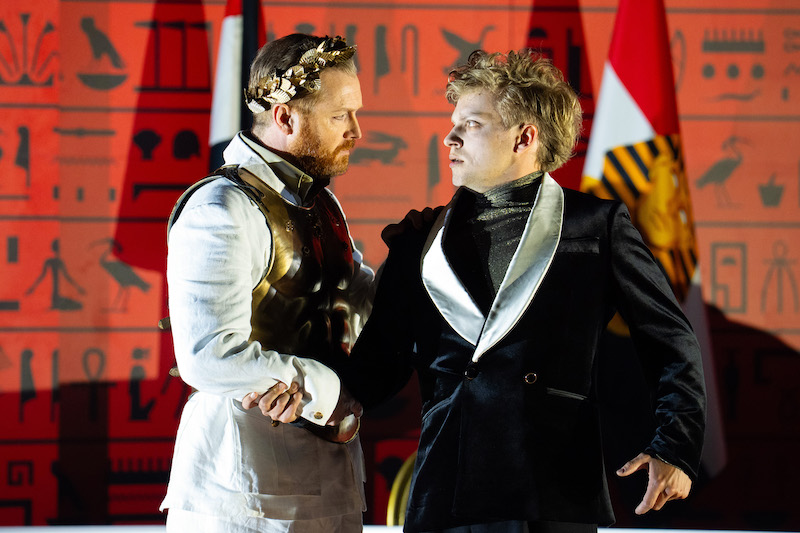
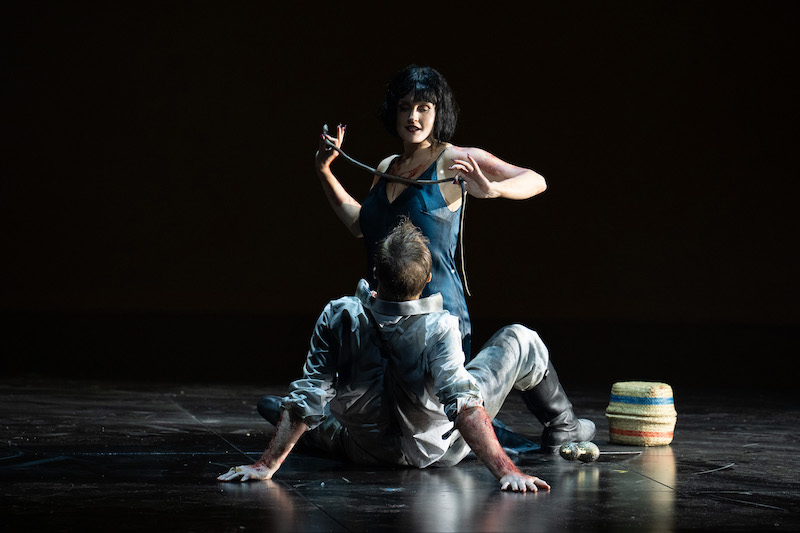 Grange’s Giulio Cesare has an outstanding cast, led by Tim Mead as an energetic, courageous and romantic Caesar, with the vivacious and exuberant soprano Sarah Brady as Cleopatra, Hugh Cutting as the sadistic, gloating Tolomeo, the glorious contralto Jess Dandy heart-breaking as Cornelia, Zheng Jiang as a fiercely brave young Sesto, Owen Willetts literally mummified as Nireno (how he must enjoy unwinding the mask at the finale!) and James Atkinson finding nobility in the lovelorn leader of Tolomeo’s army, Achilla.
An opera with four counter-tenors, this Giulio Cesare shows how varied this male voice can be, and how endlessly versatile it is to convey different personalities and characteristics – nobility, sadism, the courage of youth, steadfast loyalty.
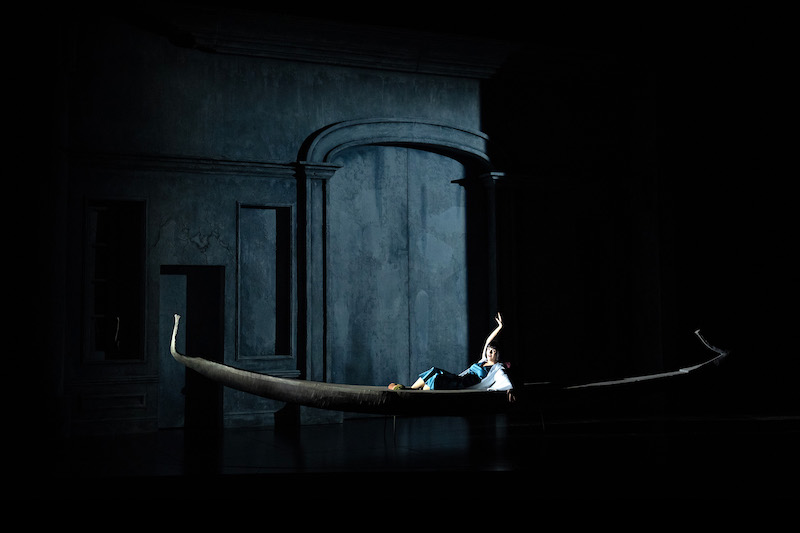
 In his director’s notes, David Alden writes of “the enigma and magic of Handel the Enchanter” – and this is what he gives us. Music of searing beauty sung by a selfish, cowardly sadist – and by a widow enduring the harrowing torment of the murder of her noble husband, the imprisonment of her brave young son and her own confinement in the tyrant’s harem. Utter enchantment from Cleopatra/Lidia, flirtatious wit, captivating sexuality … and profound, deeply moving pathos as she glides in a boat ferried by the god Anubis.
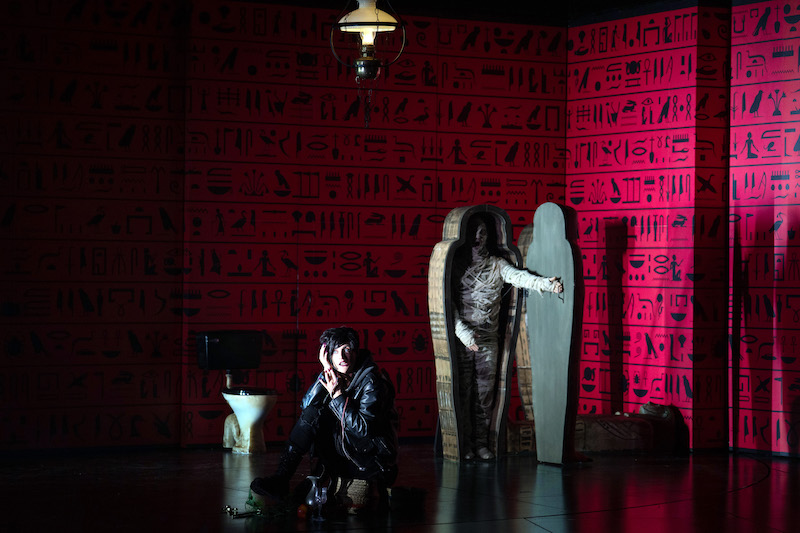
The sets are a delight – simple and monumental for the exterior and Roman camp scenes, red and black, covered in hieroglyphics, for the treacherous Egyptian court, at its most impressive in a blackly funny dinner scene in which each drink or dish served to Cesare is given to a waiting servant to try, and each in turns falls dead, poisoned.
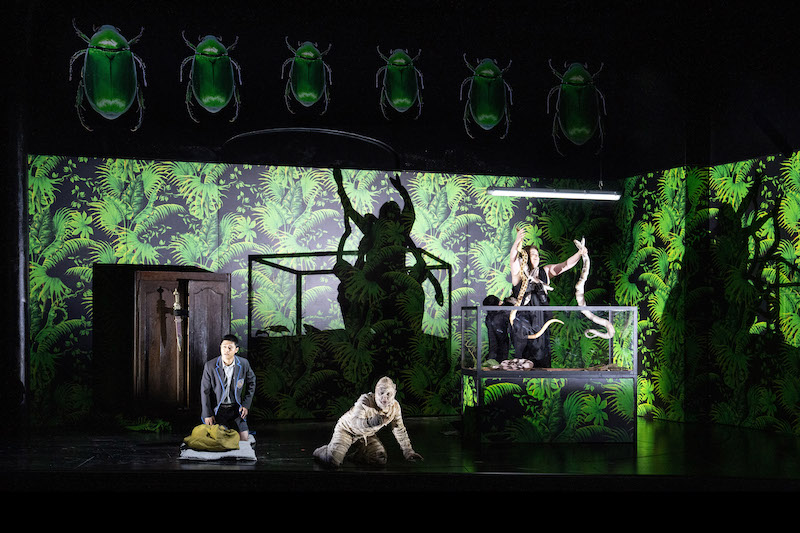
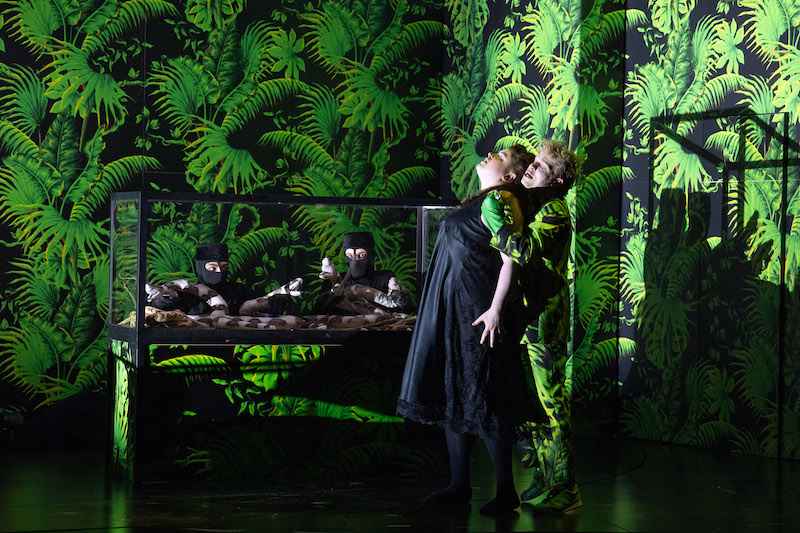 And then there is the scene in the tropical jungle, watched over by giant scarabs, where poisonous snakes weave around each other – and any unsuspecting human victim – and Tolomeo emerges, hitherto unseen, from the background of livid green leaves and creepers.
An intrinsic element of many scenes are the dancers, athletic, mainly black-clad, playing everything from poisoned waiting staff to snake-wranglers, dying soldiers and harem women, lithe, sinuous, silent but contributing powerfully to the torrid atmosphere of the Egyptian court and the stark horror of war.
 Christian Curnyn, familiar to opera fans from his many appearances at the former Iford Festival, delights from the orchestra pit, with his Early Opera Company players on outstanding and vivacious form – most notably Ursula Paludan Monberg, with the horn obbligato that echoes Cesare’s “Va tacito”.
Moving, exciting, sexy, tragic, funny, shocking … Handel gives us the full range of emotions in this opera. A contemporary of Handel’s wrote of his power to “instill something divine” in even coarse spirits, and Handel wanted to make his listeners better people. You could quite realistically say that in Giulio Cesare – and in this Grange production – both ambitions are fulfilled.
FC
Photographs: Richard Hubert Smith