 THE lives of two remarkable West Country women, whose stories deserve to be better known, are revealed in a new play at the David Hall, South Petherton, on Thursday 15th October, and a talk with music at Ilminster Arts Centre, on Friday 27th November.
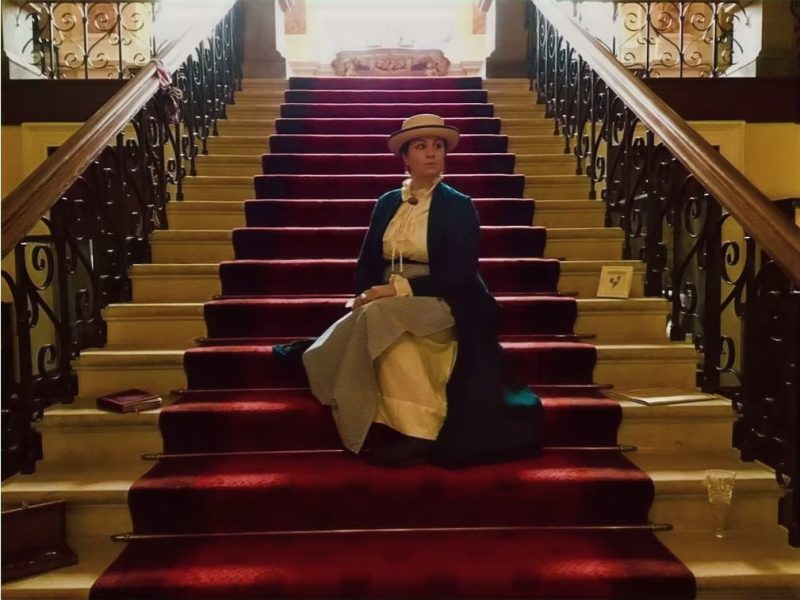
Rosalie, presented by Pleasure Dome Theatre at the David Hall, is inspired by one of Exmoor’s most remarkable women, Rosalie Chichester of Arlington Court (1865-1949). She was a scientist, photographer, explorer, collector and unapologetic eccentric – the play explores female identity and familial responsibility in Victorian England. She bequeathed all of her property to the National Trust – Morte Point, Devon in 1911 and Arlington Court on her death.
She had a fairly standard upper class youth, educated at home by a governess and trained in etiquette and genealogy. She was presented as a debutante in 1885. She never married, but gave time and support to local charities and events and held positions in a number of local clubs. Her father died when she was 16, leaving the family in serious debt, but she kept the estate debt free though it took from 1881 until 1928 to do so.
A keen photographer, who won awards for her photography, she was also an artist – some of her paintings are on show in her home. She was a lover of wildlife, and the estate was a sanctuary against hunting and shooting. In the First World War she served on the Devon War Agricultural Appeal Tribunal and supported the Women’s Land Army. She joined the suffrage movement in 1913 but was opposed to violent actions.
Rosalie is written and performed by Helena Payne, artistic director of the Somerset-based theatre company.
 Wadham is a familiar name in education circles, locally with Wadham School at Crewkerne, and nationally with Wadham College, Oxford, the first college at Oxford or Cambridge to be founded by a woman who was not a member of the royal family.
The life of Dorothy Petre Wadham will be explored in a talk, Ilminster’s Great Foundress at Ilminster Arts Centre on Friday 27th November, by Dr Matthew Spring exploring her early life, musical connections and legacy. The evening will also feature a concert by Sirinu performing Elizabethan and Stuart domestic music from Dorothy’s childhood home, historic Ingatestone in Essex.
Dorothy, 1534/1535 to 1618, was the second and eldest surviving child of the very wealthy Sir William Petre, who cquired substantial property after the Dissolution of the Monasteries and was Secretary of State to four successive Tudor monarchs – Henry VIII, Edward VI, Mary and Elizabeth I. He also received grants of land from Queen Mary, including lands formerly held by Lady Jane Grey and forfeited to the crown.
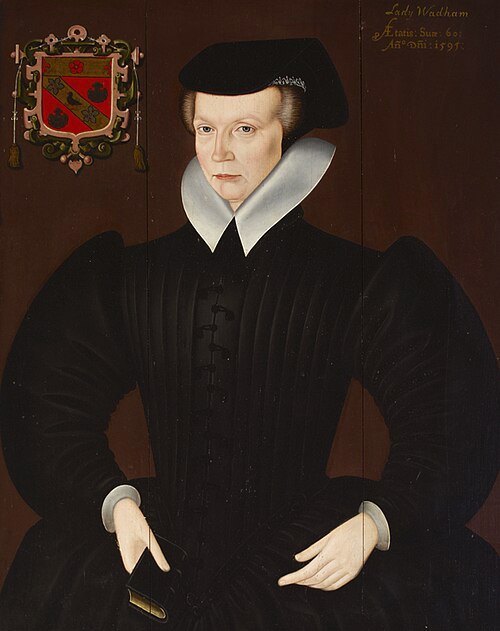 Married to Nicholas Wadham in 1555, Dorothy was a recusant (a Catholic when it was illegal to practise the religion), but was granted a formal pardon in 1615 under a 1593 Act of Parliament. The couple lived at Nicholas’s ancestral “noble moated seat” of Merryfield, in the parish of Ilton, near Ilminster. They did not have any children.
Dorothy was the sole executor of Nicholas’s will, which provided a bequest “for such uses and purposes” as he had “requested her and she hath assented to”. His wishes included the founding of a college in Oxford University, and this Dorothy accomplished, noting that “it would greatly offend my conscience to violate any jot of my husband’s will”. She added substantial funds from her own great inheritance to the funds left by her late husband in order to finance the building and establishment of the college.
Dorothy died on 16th May 1618, at the Wadham dower house, Edge, in the parish of Branscombe, Devon. Her body was taken to Merrifield and was buried alongside that of her husband in the Wadham Chapel inside the Church of St Mary, Ilminster. The brass on their imposing monument is said to be “the finest post-Reformation brass in England.”