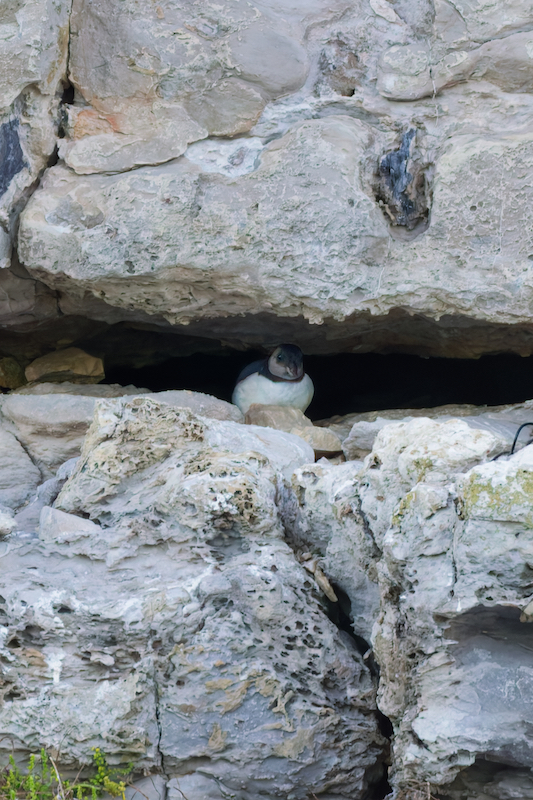
 FOR the first time in 30 years, there has been a confirmed sighting of a puffling on the vertiginous Purbeck cliffs. The news of the puffin fledgling gives hope for Dorset’s dwindling puffin colony, says the National Trust, which manages the Dancing Ledge area. The sighting follows monitoring by 13 volunteers who spent 150 hours watching the ledges.
The puffling was peeping out from a deep crevice on the sheer cliff. The sighting followed more than 15 weeks of monitoring by the volunteers as they watched the adult puffins courting, mating, carrying nesting material and, since late May, repeatedly delivering fish to the nests hidden deep within the crevice.
This rare glimpse of a young puffin emerging from its nest has given conservationists fresh hope for the future of Dorset’s dwindling puffin population. Only three breeding pairs of puffins remain in Dorset, compared to more than 40 pairs in the 1950s. Puffins are now one of the rarest breeding birds in Dorset and in danger of becoming extinct as a breeding bird in the county.
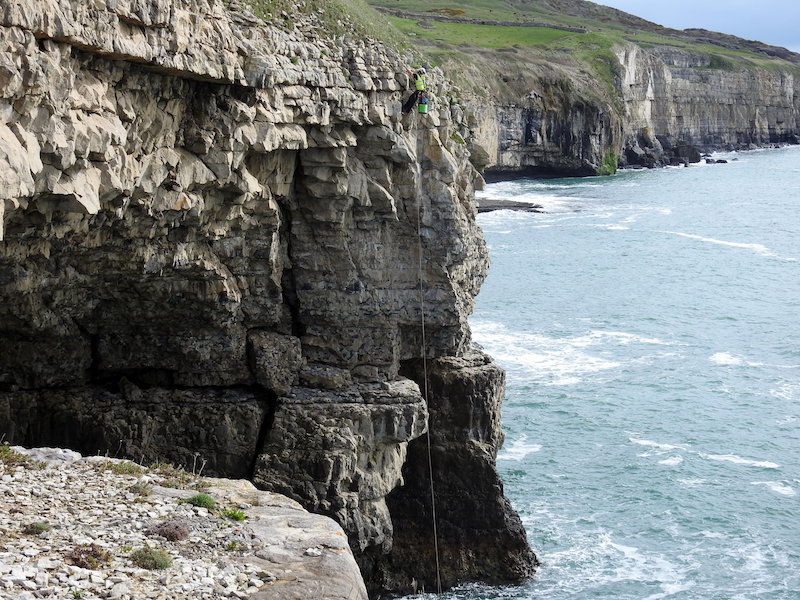
In March 2026, the National Trust renewed its efforts to understand why the last colony of these iconic birds on mainland England’s south coast has been failing to produce chicks. Motion-sensor trail cameras were placed to look into the puffins’ deep crevice, with the aim of establishing whether predators are the problem.
The cameras will be removed in August, and the footage studied, hopefully revealing more about the secret life within the ledge.
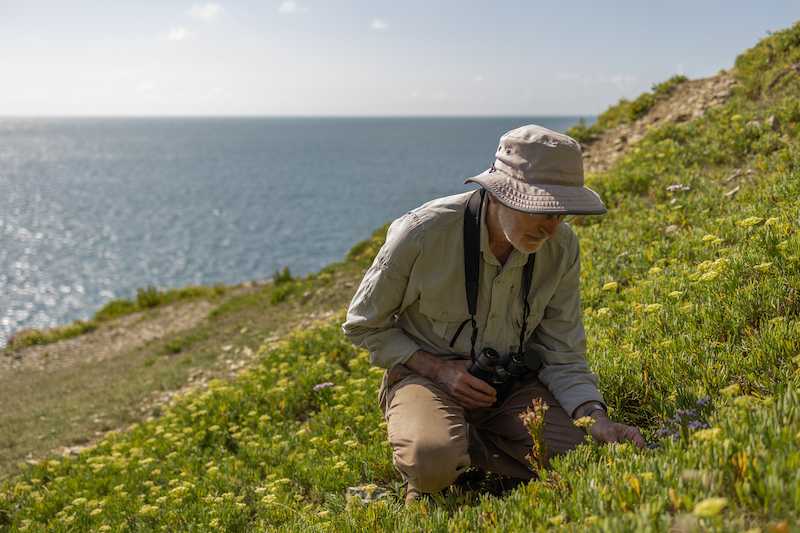
 The monitoring project is being led by Dr Richard Caldow, who holds a PhD in seabird ecology and has nearly 40 years’ experience researching and conserving coastal bird populations through roles with the Centre for Ecology and Hydrology and Natural England. He is supported by volunteers from the Purbeck Natural History Forum.
Dr Caldow said: “With only three breeding pairs remaining, every chick matters. One puffling alone won’t save this colony, but one is a whole lot better news than none. We first observed fish being taken into the ledge on 31st May, with the last fish delivery recorded on 5th July. Based on this, we estimated the puffling to be 38 to 40 days old. Puffins typically fledge between 38 and 44 days after hatching, so it had reached the minimum age at which it could leave the nest.”
The puffling is expected to leave the ledge and its parents under the cover of darkness and spend the next several years alone at sea. If it survives, it may return to Purbeck from around two years of age, although puffins do not usually breed until they are around four years old.
 In April, six adult puffins were recorded at the colony. By early June, volunteers had observed puffins carrying fish into at least two separate nesting locations on the cliff, indicating that more than one pair may have been attempting to raise chicks. However, only one pair was regularly delivering fish to a nest site visible from the monitoring point – the location where the puffling was later seen. While other puffins were also observed carrying fish to different parts of the ledge, these deliveries ceased after 12th June, suggesting that any chicks in those nests did not survive to fledging.
Dr Caldow continued: “Seeing the puffling was a great thrill, the first puffling that’s been recorded in Purbeck for a long time. It tells us that Purbeck puffins can still lay fertile eggs, hatch them and, at least in some years, find enough food to rear a chick and escape the attention of predators.”
 For those keen to discover more about the fascinating lives of puffins, the National Trust has live puffin and clifftop webcams on the Farne Islands, which stream daily from dawn until dusk between May and the end of July; the cameras are part of the National Trust’s Window to the Wild project. Anyone wishing to make a donation towards helping the charity’s conservation efforts to help puffins and other species, visit: Window to the Wild | National Trust | Crowdfunder
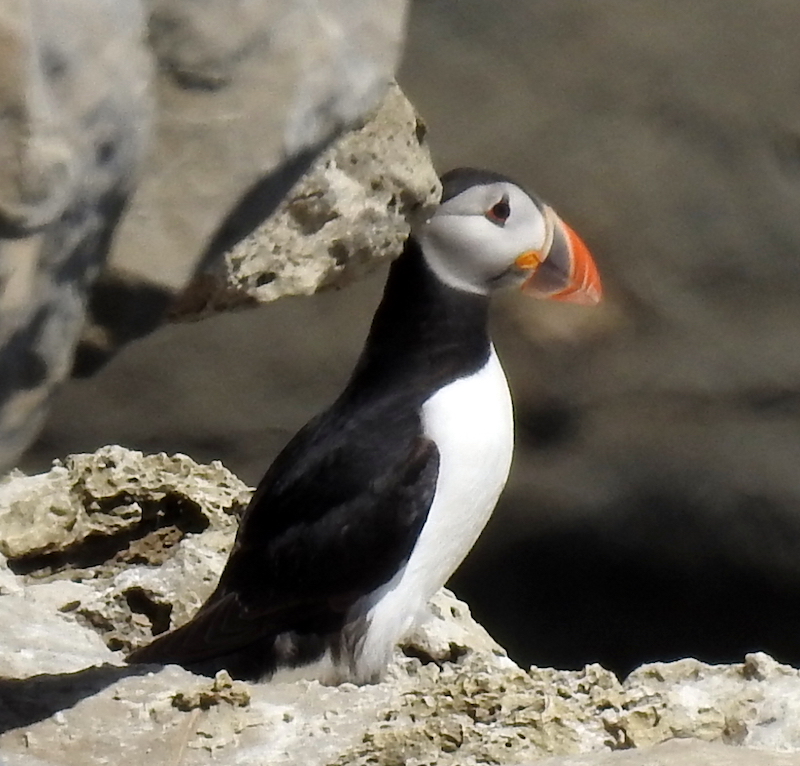
Pictured: Puffling at Dancing Ledge, photograph by Martin Shaw; Puffin Camera installation, and Puffin at Dancing Ledge, photographs by Pete Christie; marine ornothologist Dr Richard Caldow collecting data about the breeding puffins at Dancing Ledge, photograph by James Beck. All images © National Trust