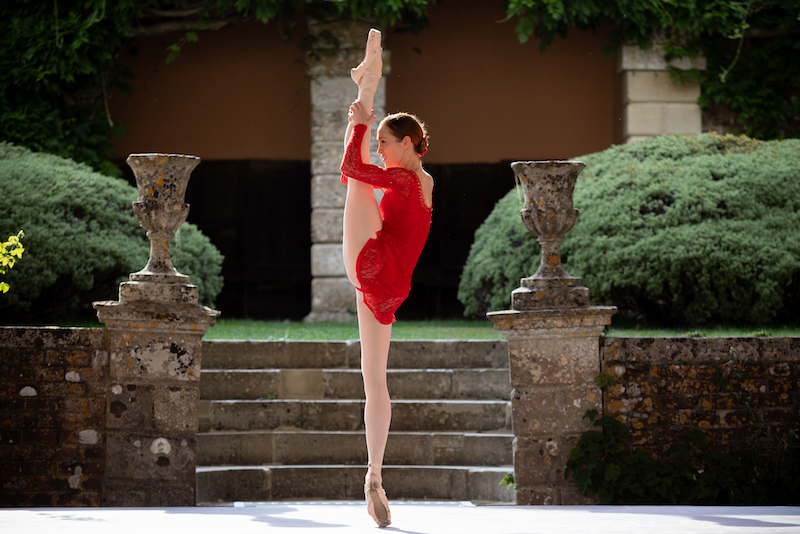
 IF Matt Brady drank a bottle of good champagne and danced until dawn on the third and final night of this year’s Ballet Under the Stars, the celebrations were totally justified. The last night of the last year of Covent Garden Dance Co’s summer residency in the 17th century walled garden at Hatch House was an unqualified triumph – the dancing was wonderful, sometimes deeply moving and often breathtaking … the food was delicious … and the weather was glorious.
And while the dancing and the food have always been part of the delights of “the Glyndebourne of dance,” the weather has not always been so kind. There have been years when the marquee has been lashed with wind and rain and elegant but skimpily clad women have been grateful for borrowed blankets. This year, the weather gods were aligned with Terpsichore, and the food, prepared by excellent local chefs, was as tasty as it was beautiful.
 After 17 years at Hatch, courtesy of Sir Henry and Lady Holly Rumbold, the summer dance festival is moving next year to a new venue at Charlotte’s Lake near Bruton, so there was a a subtle poignancy to the final Hatch programme. One of the highlights was a charming and loudly applauded performance by pupils from the Bath-based Dorothy Coleborn School of Dance. Their piece, The Statue of Affinity, a new commission by Covent Garden Dance to music by Chopin, was an impressive showcase for the talents of the young dancers over a wide age range.
A great delight this year was the return of Ksenia Ovsyanick, for long a Hatch favourite. After an absence of a couple of years, Ksenia danced three pieces, including a fiery Spanish-inflected solo to music from Bizet’s Carmen, and Lightness of Being with music by Philip Glass, danced with her regular partner Zdenek Konvalina,
One of the great classical pas de deux, the Black Swan from Tchaikovsky’s Swan Lake, thrilled Xander Parish’s many Hatch fans, expertly danced with Joy Womack. Later in the evening, the pair had two contrasting pieces, The Golden Age – Tango, danced to music by Shostakovich, and Remember Me, danced to Purcell’s famous Dido’s Lament.
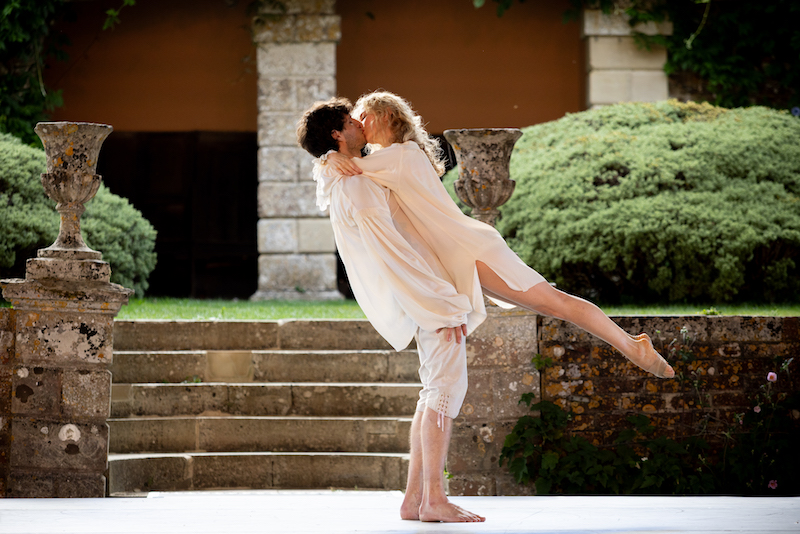
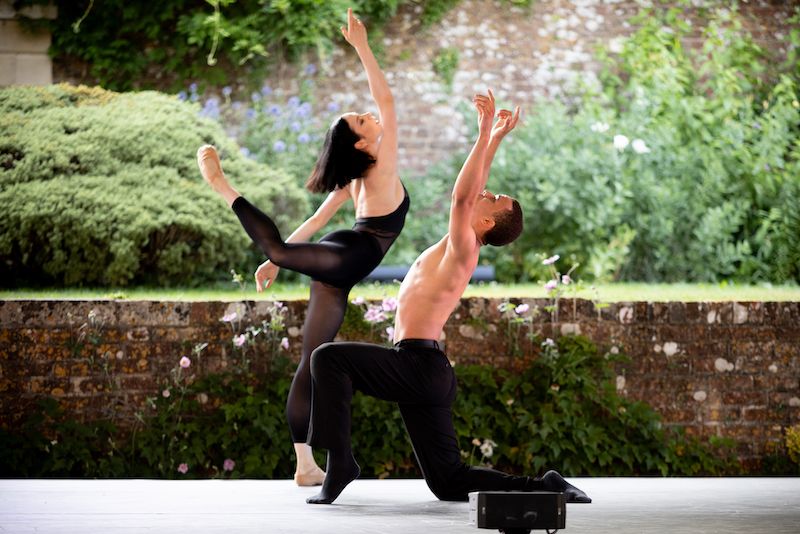 Two stars of the Paris Opera Ballet, Myriam Ould-Braham and Mickael Lafon presented striking contemporary works, closing the first act with Driftwood, and displaying dazzling and erotic intimacy in the Act III finale with Le Parc – Kiss Pas de Deux. Driftwood, danced to a soundscape by Amos Ben-Tal, saw the dancers responding to the mysterious sounds of wood creaking and bumping under water with unknown sea creatures adding their own strange music.
Zai Calliste, who so impressed at Hatch last year, returned to dance a popular solo to Nature Boy, and two emotional and engrossing pas de deux with Anna Nevzorova, opening Act I with Le Talisman, with Petipa choreography to music by Riccardo Drigo, and Act III with Black Is The Colour of My True Love’s Hair, sung by Nina Simone.
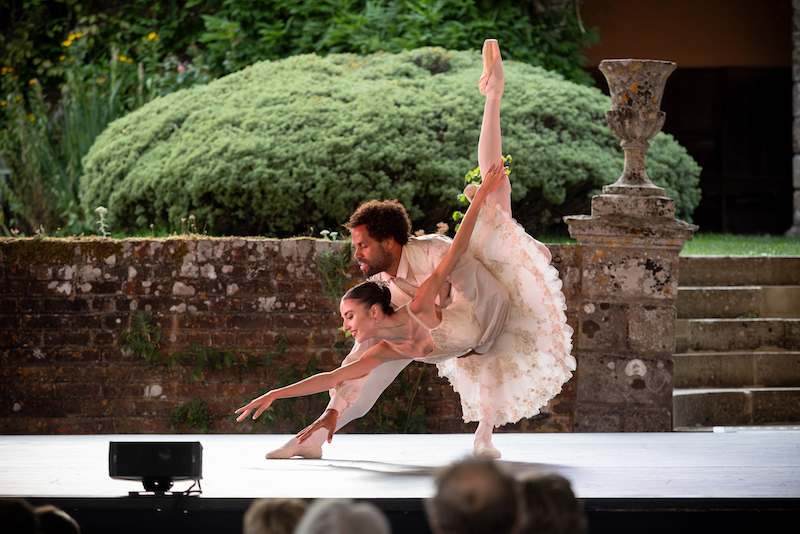
For the many lovers of the great classical repertoire, there was a special treat in the Act II closing piece, the Grand Pas de Deux from Tchaikovsky’s Sleeping Beauty, danced with joy and exquisite refinement by the Royal Ballet’s Viola Pantuso and Joseph Sissens.
 In the programme Matt Brady, founder and director of Covent Garden Dance, recalls the initial scepticism that greeted his ambition to bring world class classical ballet and contemporary dance into the intimate setting of a 17th century walled garden. He was right – and over the years, as he says, it has become “a place of artistic continuity, friendship, risk, discovery and growth.”
The final Ballet under the Stars at Hatch was designed not only as a gala, says Matt, “but also as a reflection of our original ethos: Praeteritum, Praesens, Futurum (Past, Present, Future). Those three words appeared on our very first logo nearly two decades ago and, perhaps unexpectedly, they still describe perfectly what dance itself represents.”
FC
Photographs by Alice Pennefather