 ONE of the pleasures of the original Iford Festival, this year celebrating its 30th anniversary, was the one-off events, separate from the opera which was the principal focus of the festival in the gorgeous Harold Peto-designed gardens at Iford Manor.
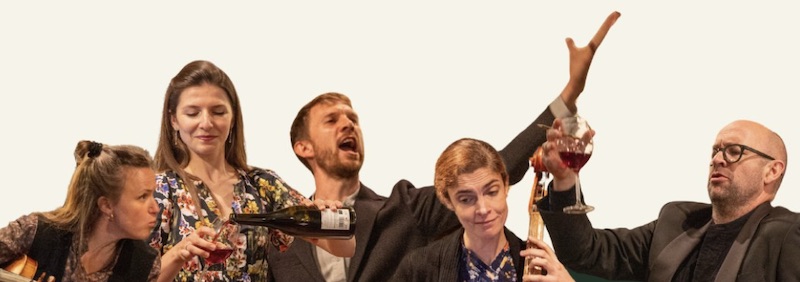
Now happily settled in the calm and gentle setting of Church Farm, Wingfield, If Opera continues that tradition, and this year brought the participatory joys of “Baroque drinking songs” to an enthusiastic audience in the Saddlespan Auditorium marquee.
The quotation marks are because this is a bit of a misnomer – what we got was a delightful mix of baroque, very early music, sea shanty and … (not quite sure) a possibly original vampire song!
The theme was drinking – in its physical, literal and metaphorical sense. So there were rowdy drinking songs like Viva, viva Bacco, Bacco and the comical Scene of the Drunken Poet from Purcell’s Fairy Queen.
But there was also an achingly spiritual duet, Favus distillans, a delicate tribute to Saint Ursula, by the first woman composer (and first named composer), the 12th century nun, poet and herbalist Hildegard of Bingen.
O Quam bonus es, by a little known 17th century woman composer, Chiara Margarita Cozzolani, was a triumph of baroque ornamentation and joyful music, a distinctly sensual hymn to Jesus Christ, savouring his blessed blood. Cozzolani should definitely be better known!
Handel provided plenty of inspiration, including the jolly Del mio caro Bacco amabile (In Bacchus’ liquid realms, I own, I would my habitation choose), and Leave me, loathsome light from Semele.
The performers, baritone and musician Tom Guthrie, sopranos Betty Makharinsky and Jasmine Flicker and the four multi-talented musicians of Vache Baroque, led the audience in some rousing participation pieces, singing the chorus for Viva, viva, Bacco, Bacco, and in a remarkably organised and well-sung round, There the Brisk Sparkling Nectar drain, from Handel’s The Choice of Hercules. The presence of some of the singers from the festival’s Carmen cast in the audience certainly helped with the volume and discipline of the round singing!
Two settings of Psalm 42, E’en Like the Hunted Hind, provided some thoughtful – but hugely entertaining – reflections on the need for water, felt by both animals and man. And never more apposite than in this lengthy heat-wave which has brought drought to most of Britain and mainland Europe.
The best-known version of the psalm, in the translated text by Archbishop Matthew Parker in 1567, is a four-part setting by Thomas Tallis, which was sung by Tom, Betty and the entertaining and versatile Jonathan Darbourne, singer, harpsichordist and occasional fiddler with Vache. The second setting, performed as a brilliant one-man monologue, with Tom Guthrie sinking humorously into an alcoholic daze, was by the 17th century German composer Buxtehude.
The concert ended with a rousing encore performance of What Shall We Do with a Drunken Sailor, with energetic support from the whole audience – and happy birthday to Brian!
FC