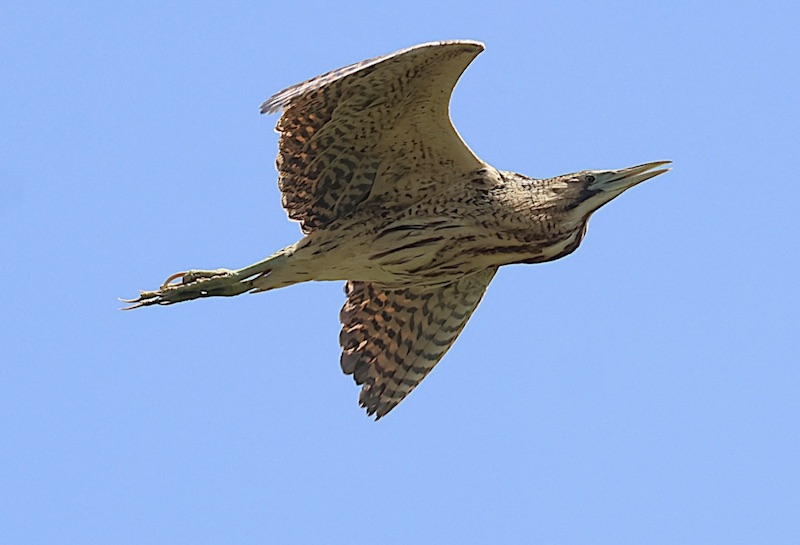
 FOR the first time in more than 140 years, bitterns have bred at the RSPB reserve at Lodmoor, near Weymouth. It is the first breeding record for Dorset since 1883.
The female bittern has been seen making regular feeding flights across the reserve, providing strong evidence that chicks are being successfully reared. Although the fledglings have not yet been seen moving around the reedbeds, reserve staff are hopeful they will fledge in the coming days.
Excitement first began to build this spring when a male Bittern was heard booming well into late May, long after the species would usually have moved on from the reserve following a brief stopover. The booming then ceased, and in early June the female’s regular feeding flights began, confirming suspicions that breeding was underway.
Although one chick is believed to have been lost to natural predation by the resident Marsh Harriers, which are also raising young on the reserve, the local team remains optimistic that the remaining chicks will fledge successfully.
Bitterns are one of the UK’s rarest breeding herons and are very secretive, spending most of their lives hidden within dense reedbeds. The return of breeding Bitterns to Dorset is an exciting milestone in one of the UK’s greatest conservation success stories. Reedbed loss, wetland drainage and hunting drove bitterns to extinction as breeding birds in Britain by the late 19th century. Although they began to recover during the 20th century, numbers fell to just 11 booming males by 1997.
Research led by the RSPB, in partnership with Natural England, identified the habitat conditions bitterns need to thrive, helping shape reedbed management that is still used today. The charity has since restored and created new extensive wetland habitats across the country, providing shallow pools, healthy fish populations and extensive reedbeds the species depends upon.
The return of breeding bitterns to Dorset is a testament to the careful management of these wetland landscapes at RSPB nature reserves in the county.
Peter Robertson, RSPB Dorset Reserves Site Manager, said: “At RSPB Radipole and Lodmoor, we’ve focused on improving the condition of the reedbeds through reed cutting, carefully managing water levels, grazing, creating and maintaining pools and ditches, and reconnecting RSPB Lodmoor to the sea to allow more fish to enter the reserve.
“This combination of habitat management has created the right conditions for bitterns to overwinter at our Dorset wetlands and now to breed at RSPB Lodmoor. Seeing the species breed in Dorset for the first time in more than 140 years is an incredible moment, and we’re really excited about what the future holds for bitterns in the county.”
Pictured: Bittern at RSPB Lodmoor, photograph by Phil Cheeseman