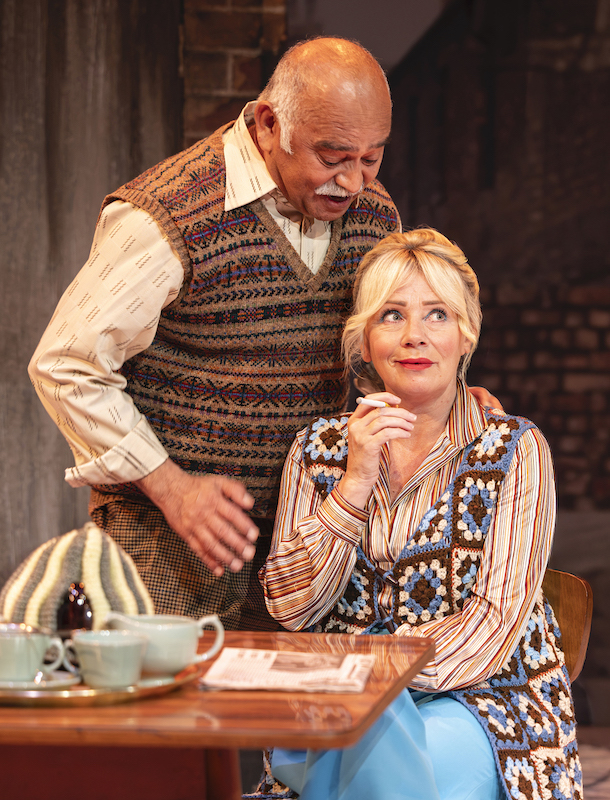
 WHEN Ayub Khan Din’s play East is East first hit the stage in 1996, it surprised audiences not only with its vivid depiction of the lives of a working class immigrant family in Salford, where seven mixed-race children, all born in the UK, battled with their Pakistani father’s dictatorial insistence on Muslim traditions, but also with so many brown actors on stage at any time.
Times have changed, and the current revival of the now-classic play by Wiltshire Creative and theatres in Bolton, Derby and Glasgow really highlights those changes. Rachana Jadhav’s cleverly versatile set takes us into the cramped house where the Khans live, the Fish and Chip shop they run, and the yard where they take refuge. Mother Ella (Samantha Power) works from dawn till dusk to keep the peace as father George (Bhasker Patel) bamboozles his way through life, desperately trying to control his children in this foreign world.
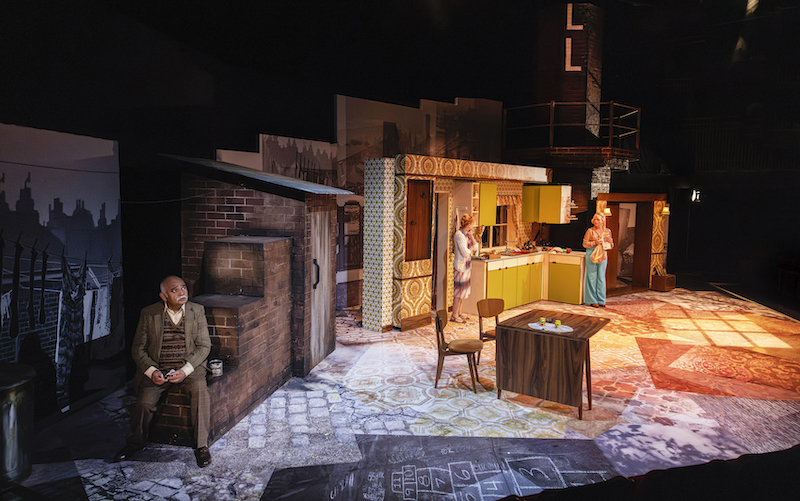 The Lancashire accents, delivered at high speed in Kash Arshad’s production, take a bit of adjustment and were a frequent comment in the interval at Salisbury.
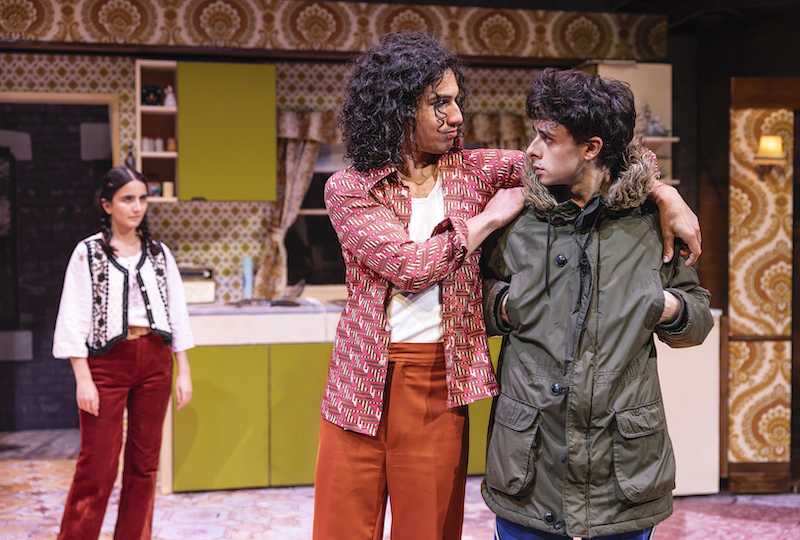
East is East is full of larger-than-life characters, and brings its audience into the hurly-burly of life in an overcrowded house with a tight-knit family of very different people. There’s no doubting Ella’s love for George, nor his for her. Their oldest son has already fled the nest, but they live with devout Maneer (Joeravar Sangha), conflicted Abdul (Danyal Ismail), trendy Tariq (Zaki Ali), student Saleem (Matthew 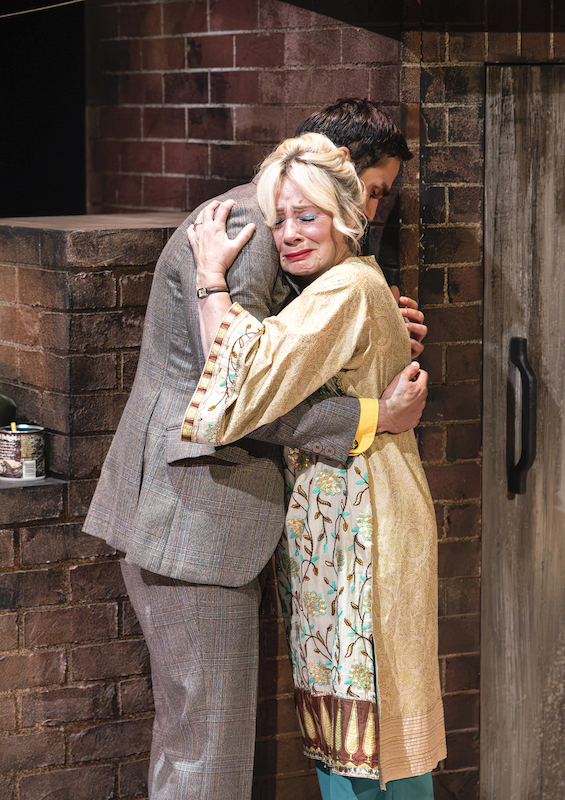 Khan), twitchy teenager Sajit (Rohan Macleod) and their
sister Meenah (Sushil Chudasama), all of them at various stages of rebellion and identity crisis.
 When George tries to arrange a marriage for the two eldest boys, he brings the condescending and arrogant Mr Shah to their home, a man who immediately scuppers all George’s claims that the Muslim society he left behind is a classless idyll.
The original play was filmed in 1999, and many of the cast have now made their names as actors on film and TV. Reviving the play for the 2026 stage involves lots of trigger warnings and much concern over the language and attitudes … but we are all still here!
The Salisbury programme is introduced with a message from Gareth Machin and Rosa Corbishley, 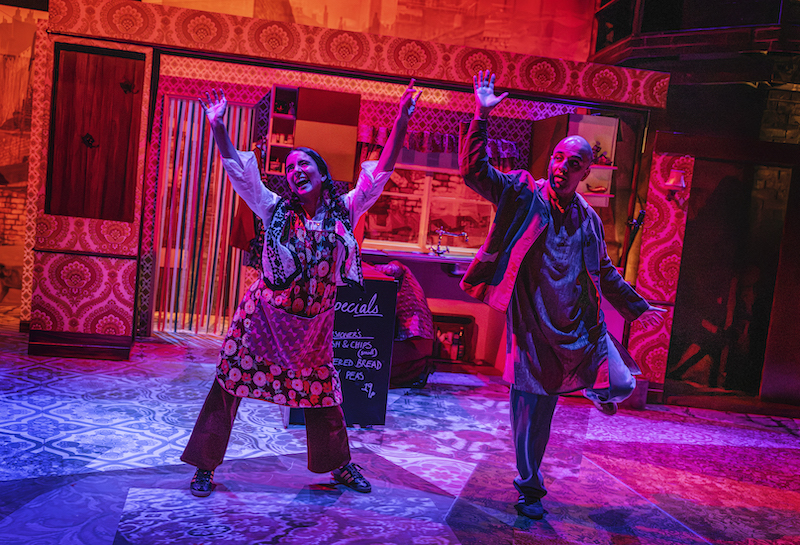 describing the play as “… this classic story of identity, generational conflict and the messy, unbreakable bonds of family …” It certainly brought a packed audience whose ages ranged from student to octogenarian, some revisiting an old favourite, and some discovering unknown but very recent history.
East is East is on at the Playhouse until 14th November.
GP-W
Photographs by Pamela Raith