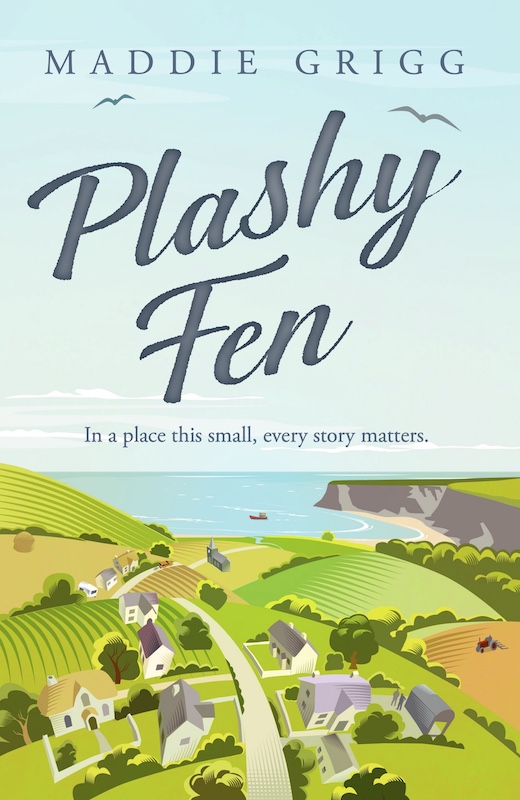
 IT could be the slogan of any local newspaper or website, but “Every story matters” is also part of the subtitle of a Dorset-set novel by the journalist Margery Hookings – Plashy Fen: In a Place This Small, Every Story Matters.
Set in a fictional coastal West Dorset village, this is an affectionate and beautifully observed study of rural life in the 21st century, with its mix of long-standing local families, from the historic manor to the council house terrace, and incomers (not all of whom are welcome, partly because of their patronising attitudes and condescending assumption that their – new and urban – ideas and ways are inherently better.)
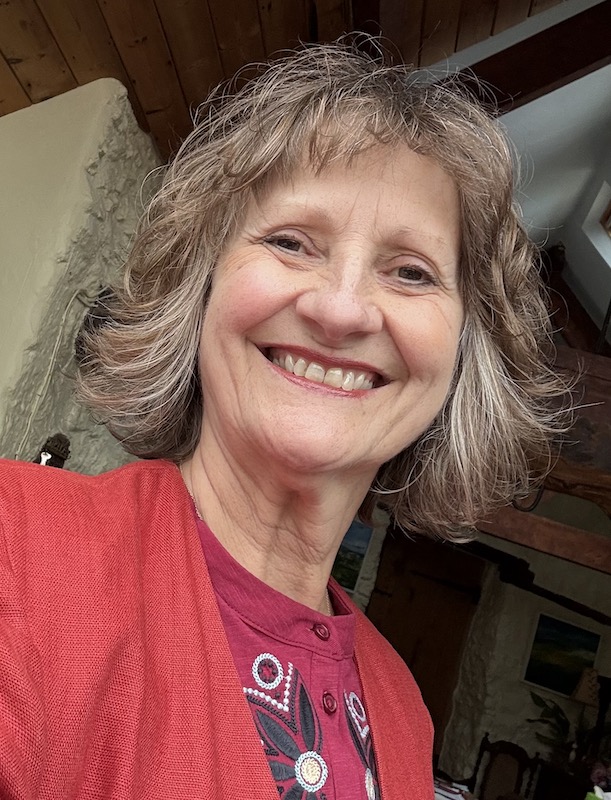
The novel is published under the name Maddie Grigg, the pen name of Margery Hookings who was editor of the Bridport & Lyme Regis News from 1999 to 2004 and is a former feature writer for The Marshwood Vale Magazine, Dorset Magazine and other publications. For the past 11 years, as Maddie Grigg, she has written the Maddie’s World column about country life for The People’s Friend, the world’s longest-running weekly magazine for women.
A familiar sight in doctor’s and dentist’s waiting rooms back in the 1950s and 60s, the People’s Friend is still quietly going strong, “a solid, kind publication with a loyal readership,” says Margery who had been surprised to hear that it was ‘still alive and kicking,’ when the then editor contacted her out of the blue ‘and asked me to write a weekly column after seeing my blog. I have some very supportive readers of a certain age, which is lovely! It hasn’t changed a lot since I saw it so many years ago.’
Plashy Fen is set in an imagined Dorset village by the sea and explores community, friendship, belonging and the stories that connect people in a small place. ‘It is an entirely fictional place,’ says Margery, ‘but I’ve been writing about the real people of West Dorset for nearly 45 years.’
Initially it is almost reminiscent of Dylan Thomas’ famous radio play Under Milk Wood, which listens in on the lives of people in a Welsh coastal village. Plashy Fen gives a drone-high overview of a typical Dorset village and its various characters, kind, lost, struggling, ambitious, hard-working, off-grid, trendy, imaginative, lazy, honest, rude …
The story is told through a chorus of voices, with interwoven tales that explore a real village shaped by friendship, longing and the tension between those who arrive and those who feel they can never quite leave. There is the recently widowed vicar who is not sure his place is in this little rural community rather than a more challenging urban setting. There is the aged farmer’s wife in her traditional old farmhouse, still talking to her late husband – and her estate agent daughter whose abrasive businesswoman facade conceals a more complicated relationship with the village. There are the three brothers, living in separate crumbling caravans on a hillside field who scrape precarious livings poaching and fishing.
 There is the hard-working farmshop owner and her sister-in-law, Lindy Vickery, practical, endlessly kind, almost crushed by the unkindness of her once-loving husband, a woman who quietly holds the community together. She wouldn’t recognise this herself – and perhaps many of her fellow villagers don’t either, until the latest and most patronising of the incomers bid to take over one of the cornerstones of Plashy Fen life.
And there is the decades-old murder of one who ‘got away’, whom the locals can never forget.
Margery says: ‘This rural landscape and those who make their living from it are important to me. It’s the world I know. I’m a tenant farmer’s daughter who was born and brought up just over the county border in Somerset.
‘I’m interested in the backstories of people who might, on the surface, seem ‘ordinary’. I’ve always felt a bit of a champion for the rural underdog.’
Last year, as part of a local heritage project she led for the Windrose Rural Media Trust charity, she wrote a book recording the memories of people born and bred in Broadwindsor. It culminated in an archive film show in the village hall, with profits from book sales split between Windrose, the community shop and community pub.
Plashy Fen was launched in the autumn just a few miles away at Washingpool Farm Shop, run by the Holland family at Allington. It was an entirely appropriate venue, says Margery: “Everyone has a story to tell and my imagined characters in Plashy Fen are no exception. One of the fictional settings in the novel is a farm shop, where key characters meet and things happen. Having Washingpool as the venue for the launch couldn’t be more appropriate.
“Washingpool began in 1971, long before farm shops and local food became a ‘thing’. It’s one of those local, unpretentious family businesses worth treasuring. I was chuffed to bits when the farm shop offered to host the launch.”
If you are looking for a delightful read – or an ideal Christmas stocking-filler for the non bonk/blockbuster/crime reading fans in your circle – Plashy Fen is a warm cuddle on a cold winter’s night. It’s a page-turner written with real knowledge of the small world it explores with such affection.
Plashy Fen is published by Larbok Creative; it is also available on Kindle.