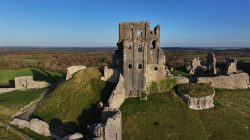
 LOCALS and visitors have just over a month to take advantage of a rare opportunity to climb high into the ruins of Corfe Castle, and see the breathtaking views from a special platform on the Keep. The platform will be closed to visitors from the end of February, as a £2 million, three-year conservation project enters its final phase.
The National Trust was given permission by Historic England to build the platform as part of the works and since December 2024, the King’s View has given visitors the chance to ascend the Keep and access royal living quarters, where nobody had set foot in over 350 years.
The tours, which are accompanied by a knowledgeable guide or ‘storyteller’ have been popular, raising more than £63,000 to date with funds going directly towards conservation works.
The Keep, (or King’s Tower), was built around 1107 for William’s son King Henry I, from gleaming white Purbeck limestone. It stood at 23 metres tall, positioned on top of a 55-metre-high hill, visible from miles around.
Before its destruction by Parliamentarian troops in the Civil War, the tower had been used to provide Henry I with luxurious personal quarters and included the addition of a ‘garderobe’ – an early ensuite – and an ‘appearance door’ from which the monarch and his family could appear to his subjects, much as the balcony at Buckingham Palace is used today.
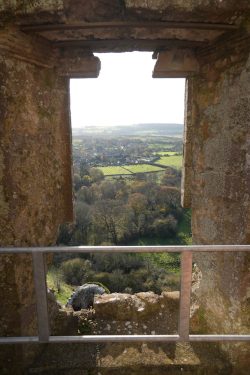 James Gould, the Trust’s Corfe Castle operations manager, says: “When the castle was occupied by royalty, you would have needed some serious privilege to enter this area. We’d love as many people as possible to enjoy the experience before it’s gone – are still hopeful for a marriage proposal!”
The conservation project began in 2023 to protect Corfe Castle from the impact of climate change, with specialist masons working from ropes and on scaffolding to remove vegetation and conserve the stonework. Masons use similar techniques and materials to those of their predecessors nearly 1,000 years ago.
Stonemasons have been working throughout the seasons with the last phase focusing on the Inner Ward, including the North Building and walls perched above the steepest slopes of the mound. These areas are among the least accessible and least studied, offering exciting opportunities for new discoveries.
They’re also working in the same area where archaeologists recently searched for the long-lost sallyport featured on BBC’s Hidden Treasures. The sallyport was a gateway that enabled Parliamentarian forces to capture the castle during the Civil War.
Christina Newnham, senior building surveyor at the National Trust said “During this final phase, we’re working through some very cold months on walls that are hardest to reach. However, every stone tells a story, and this phase could reveal more secrets about Corfe’s dramatic past.”
Corfe Castle’s walls, some dating back to the 11th century, have endured centuries of weathering and deliberate destruction during the Civil War. Today, climate change poses a new threat: hotter summers dry out lime mortar, while warmer, wetter winters accelerate vegetation growth, loosening stones and destabilising walls. This project aims to make the castle resilient for generations to come.
Once complete, there are plans for a near constant cycle of conservation focussing on ongoing care and vegetation management. The project is being supported by a generous grant of £150,000 from the Wolfson Foundation, with the rest funded by the National Trust; there is an ongoing fundraising appeal.
Pictured: Views from Kings’ View platform at Corfe Castle; © National Trust; photographs by Richard Gregory