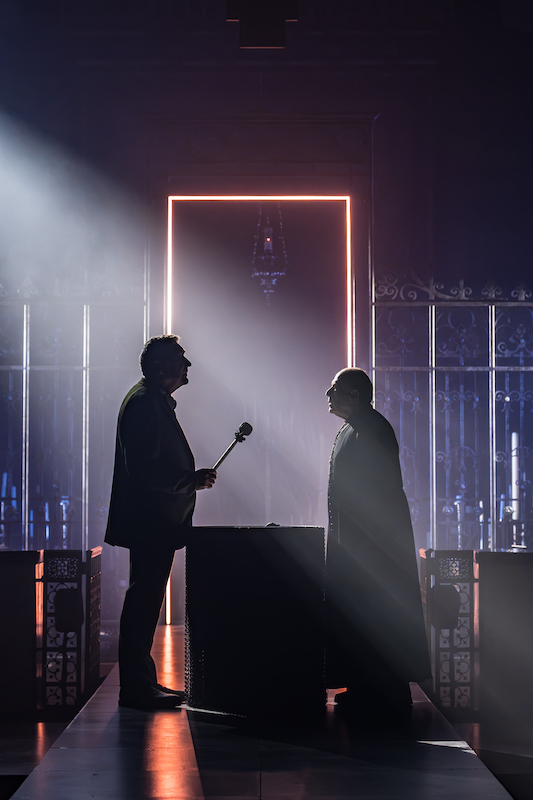
 TS Eliot’s 1937 verse play Murder in the Cathedral was created as a site-specific event, performed where the action is set, in Canterbury Cathedral. When Tom Littler, director of the Orange Tree Theatre in Richmond, decided on a 2026 production, he moved the setting across the road into the church of St John the Divine, and after a sell-out run it has come to Bath’s Theatre Royal for its final performances until 21st November.
 David Suchet reigns with benevolent power and conviction over his flock – sometimes the audience – as the Archbishop of Canterbury returned to his flock after seven years’ exile in France. The true story of Thomas Becket’s assassination by the knights of King Henry II in 1170 is well known*, but Littler’s production brings it fresh and relevant to a 2026 audience.
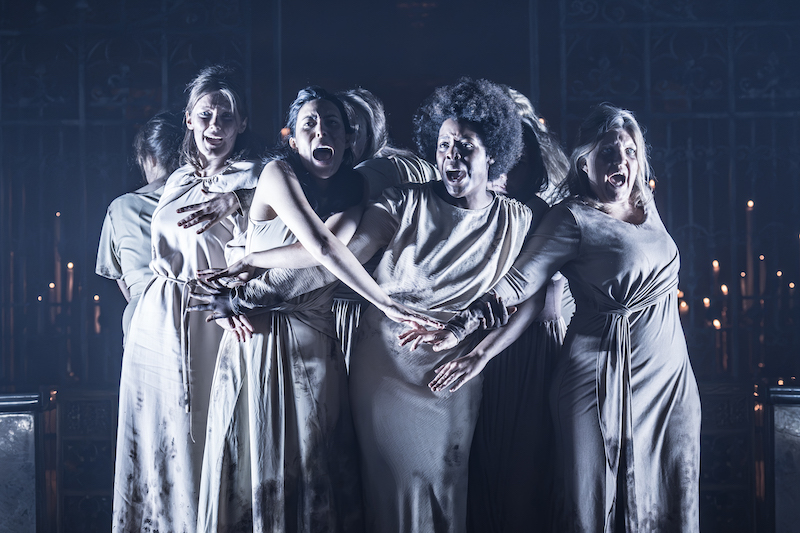
Moving from a church setting into a theatre, the set is a simple if abundantly candled altar, and a thrust into the audience. The action is in shadows. Eliot’s play relies on a chorus of women of Canterbury and here they sing their narration to new music by Orlando Gough, directed by Michael Waldron. It is remarkably effective, taking Eliot’s original Greek-inspired chorus based in the 12th century and bringing it up to date with “modern” taiko, and movement (directed by Lizzi Kew Ross.)
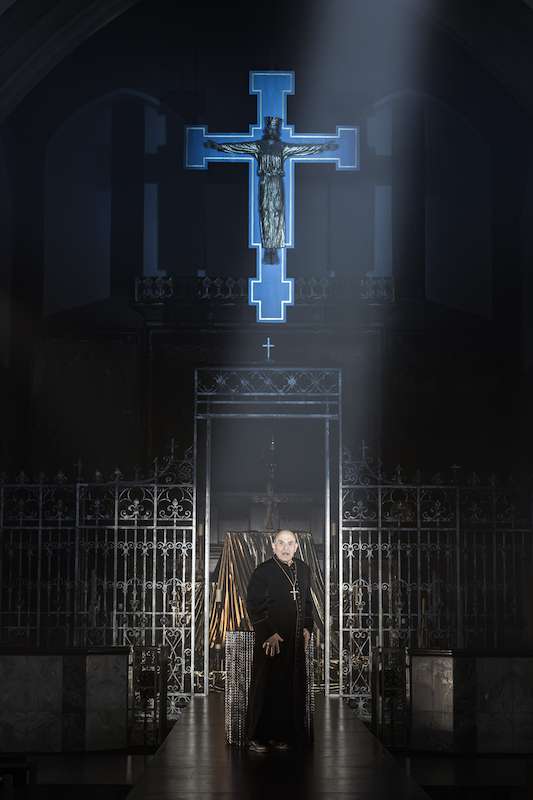 The atmosphere starts in the theatre foyer, with wafts of gentle incense en route to the auditorium, where the candles are lighted, creating a scene which is at once serenely beautiful and full of menace. The bishops of Canterbury receive news that Thomas has landed in England, and immediately realise that the initial rejoicing can only be a precursor to intense new political and ecclesiastical conflict. The arrival of the archbishop spreads a warmly inclusive light over the congregation, and the Christmas Day sermon is addressed directly to the audience, creating an involvement I have not seen in other productions of the play.
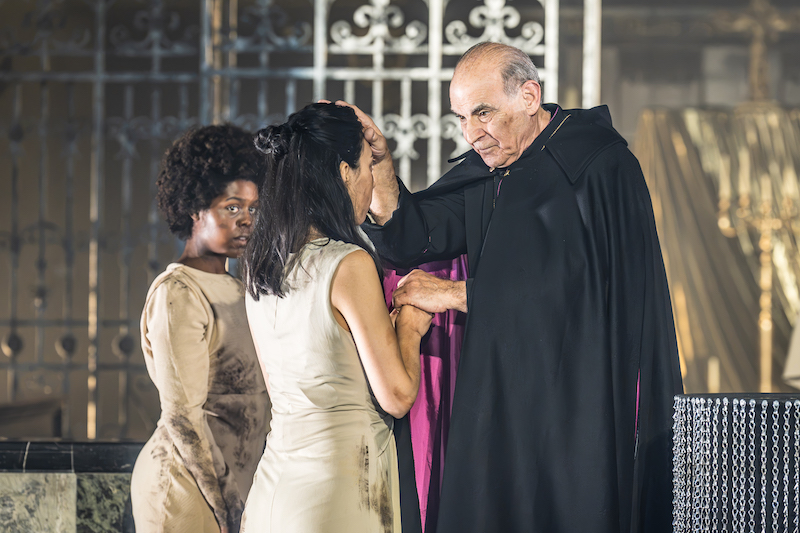 The murderers make their first appearance as ghosts of Thomas’s past, returning to despatch Becket, and then breaking through the grieving priests and chorus to put their own version of their actions, in harshly modern words packed with cod-psychology to justify the murder.
It is chilling, moving, perfectly paced and with a central performance full of conviction, humanity, self-questioning and blessing … at the same time it is a call to caution in a world filled with empty promises.
* Perhaps not by the couple who thought they had come to see a murder mystery with Poirot at its helm!
GP-W
Photographs by Marc Brenner