 CRIME and punishment, deportation and the consequences of artistic deprivation are all big news at the moment, in a way they perhaps weren’t in 1991 when Timberlake Wertenbaker wrote her iconic political drama Our Country’s Good. She was inspired by visits to Wormwood Scrubs prison, and the effects that exposure to theatre had on long-term prisoners convicted of serious crimes.
Her play, based on Thomas Keneally’s novel The Playmaker, is drawn from stories of real people – soldiers back from the disastrous American War of Independence, sent out to build new communities in Australia, with the enforced labour of deported criminals. In the 1780s, petty theft was a hangable offence – these were the “lucky” ones, whose sentences were commuted to deportation and seven years hard labour, after which they could settle half-way around the world from their homes.
 Wertenbaker’s brilliant play is full of timeless insights, humanity and brutality. It might be unusual fare for the regular audiences of Amateur Players of Sherborne – the only non-professional company I know still to keep the word “amateur” in its title. Director Jane McKenna and her cast and crew have done every possible thing to prove that it really IS just another word in this extraordinary, almost immersive, production on at the Studio until Saturday, and sold out weeks ago.
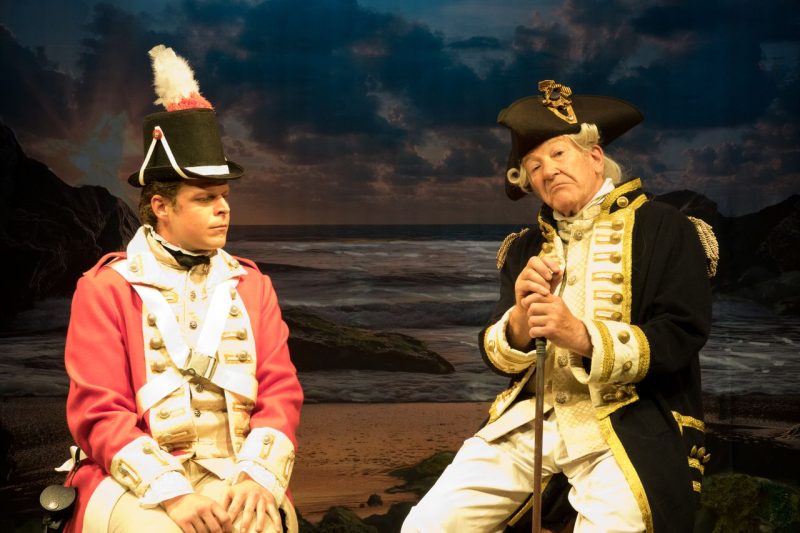
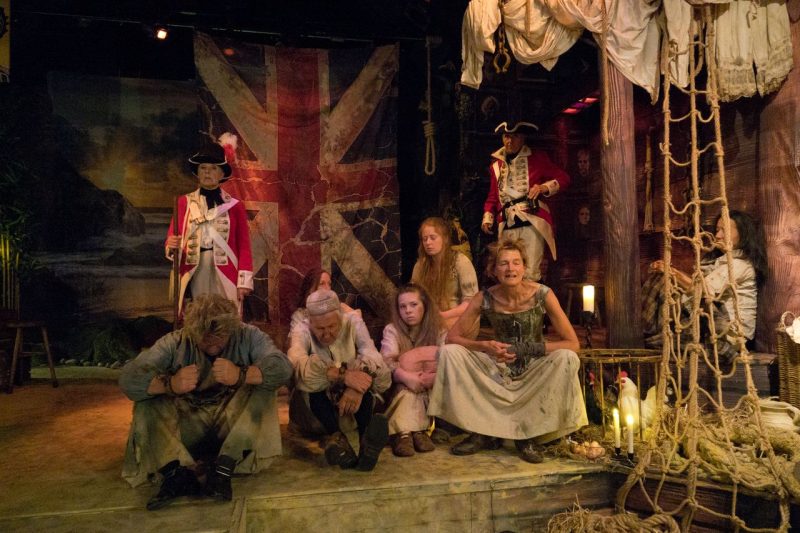
 Owning their premises has meant that a great deal of time and imagination has gone into preparing the stage and auditorium for the six performances. Jane McKenna has not just directed, but masterminded the sets, soundscape and costumes (many of which she made, including all the accurate military uniforms). The result for the audience is a Redcoat greeting and a five-step journey from the junction of Coombe and Blackberry Lane in 2026 into a creaking hulk crossing the ocean in 1786, and on to an encamped beach that will become Sydney.
 Hungry, dirty and frightened convicts huddle, watched over by dispirited soldiers. The women take what comfort they can, selling themselves to the frustrated soldiers, who have left wives and children at home in England.
This is the place Captain Arthur Phillip has been called out of retirement to civilise, and as well as the construction of towns, his idea is to introduce the convicts to the culture their lives have so far lacked. He gives the diffident Lt Ralph Clark the charge of producing a play, Farquhar’s comedy The Recruiting Officer, with the deportees as the cast. These women and men have been sent away from their country, for their country’s good. And now they are thinking, for the first time, about what “country” means to them.
 APS has gathered a powerful cast to perform this challenging play, 15 actors doubling up in 24 roles. The enveloping nature of this production calls on them to bring to life very different people. Andrew Holt creates not only Lt Gov Ross, a formidably intransigent solder, but also an oddly poignant version of the hangman, Freeman. Andrew Middleton makes the Jewish outsider Wisehammer a thoughtful, caring and gentle thief, in love with words and their meaning. Gary Brooks’s Harry Brewer is literally mad for the love of the wary Duckling Smith (Hazel Perrett).
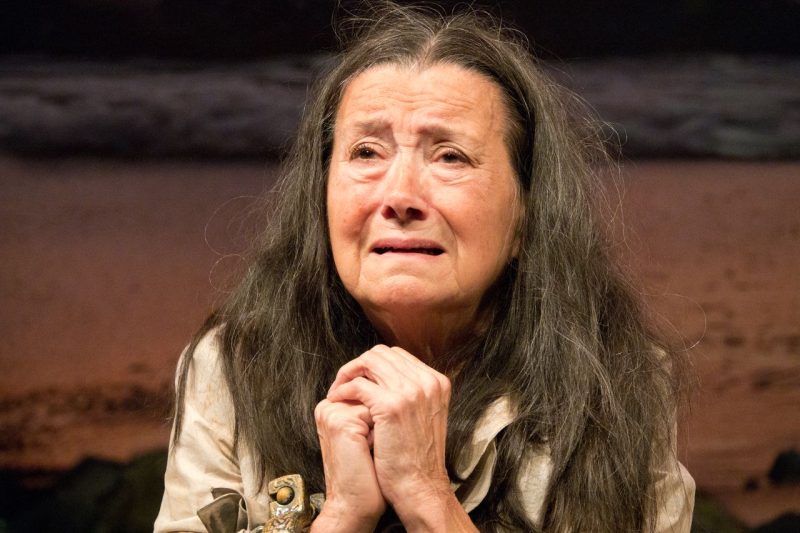
  Maureen Nethercott viscerally inhabits Liz Morden, a woman whose life was wrecked almost at birth. Bev Taylor-Wade’s Dabby Bryant, a Devon-born mariner who knows she has the navigational
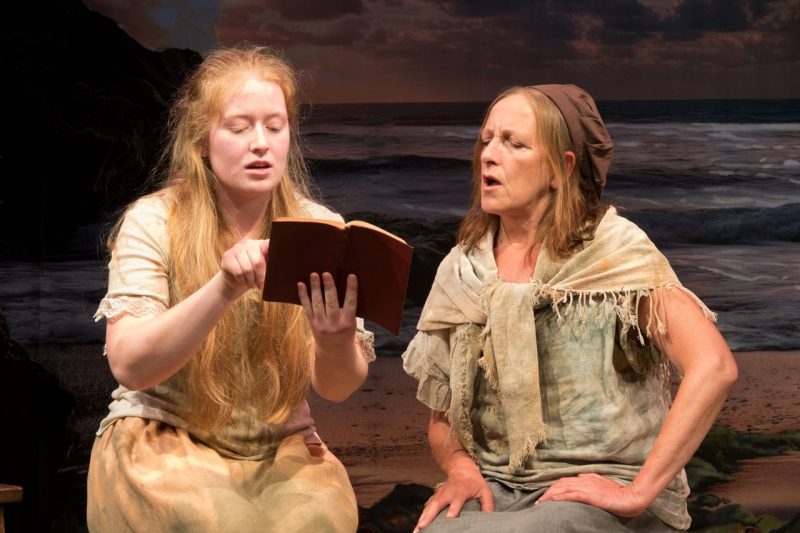
 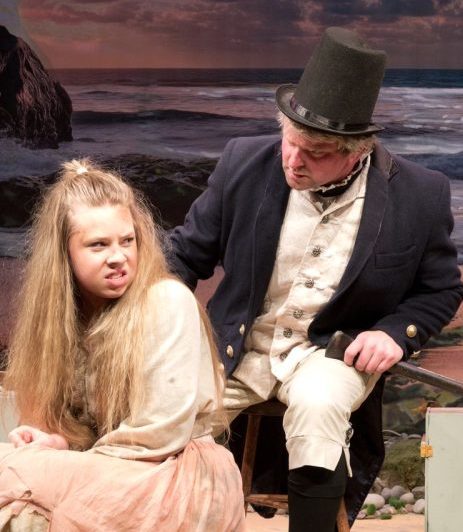 skills to get home, is the garrulous glue of the women’s camp. Robert Sideway was a thief who loved the London stage, and Clive Miller is making the most of his histrionic tendencies. Charlotte Berry’s shy reader, Mary Brenham, blossoms under the attention of Sam Frost’s Lt Clark, the man who must make the play happen. Patrick Knox is the perfect Capt Phillip, a man you know has Aristotle and Cicero on his bookstand.
The indigenous inhabitants of Australia are represented here by an Aboriginal painting and the voice of Warren Clements, and the director has added a new ending, sending her audience back out to the 21st century with the uncomfortable certainty that nothing changes – and we never learn.
Much as I hate the cliche “next level”, there is no doubt that this production has taken the already-excellent APS to a new tier.
GP-W