 THE 2026 Dorset Opera Festival brings one of the great tragic dramas of the repertoire to the stage of the Coade Hall at Bryanston School, and the return of a favourite comic opera from 21st to 25th July. There are performances of Saint-Saens’ Samson et Dalila on Wednesday 22nd and Thursday 23rd at 7pm, and Saturday at 2pm, and Donizetti’s L’Elisir d’Amore on Tuesday, Friday and Saturday at 7pm, and Thursday at 2pm.
Stars of the two operas include a Korean super-couple of singers, Won Whi Choi, making his UK debut in the title role of Samson, and Haeran Hong as the central love interest, Adina, in L’elisir. Both are very well known in South Korea in their own right and a Dorset Opera Festival spokesperson says: “We are incredibly lucky to have them.”
Starring as the lovelorn Nemorino in L’Elisir is the very talented young tenor Jay Broadburst, who has been singing small roles at DOF for the last few years but this year moves into the lead role. He made the news recently while singing a small role in Macbeth with Chelsea Opera Group when the Macduff went ill and Jay took over and sang the role unrehearsed – and completely brought the house down with Macduff’s famous aria, “Ah, la paterna mano”.
 Donizetti’s sparkling romantic comedy is directed by Andy Morton, whose Dorset connections go back many years to his time with Opera Circus. Since then he has been based in Australia, as director at Opera Australia. The opera tells the story of the shy and lovable Nemorino, hopelessly in love with the beautiful but wealthy Adina who is also courted by the boastful Belcore (Jonathan Eyers). Convinced that only a magic love potion can win her heart, he turns to the travelling quack doctor Dulcamara (Aidan Smith) — with gloriously unexpected results. Adina’s friend Gianetta is played by the Dorset soprano Daisy Lapworth.
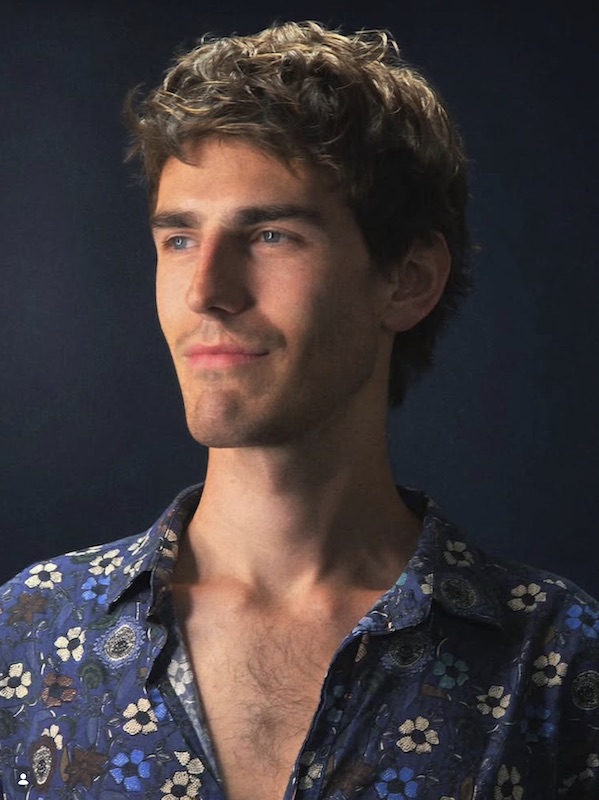 L’Elisir d’Amore contains some of the most beautiful music ever written for opera, including the famous “Una furtiva lagrima”. It is a work overflowing with warmth, humour and humanity and remains one of the most popular operas in the repertoire. The production is directed by Andy Morton and conducted by Frank Zielhorst. The designer is Rufus Martin, with costumes by Libby Watson and lighting by James Smith.
Based on the biblical story of the Jewish strongman Samson and the seductive betrayer Delilah, Saint-Saens’ Samson et Dalila has a French libretto by Ferdinand Lemaire and was first performed in Weimar at the Grossherzogliches (Grand Ducal) Theater (now the Staatskapelle Weimar) on 2nd December 1877 in a German translation.
The story of Samson and Delilah is found in Chapter 16 of the Old Testament Book of Judges in the Old Testament. It is the only opera by Saint-Saëns that is regularly performed. The second act love scene in Dalila’s tent is one of the set pieces that define French opera. Two of her arias are particularly well known: “Printemps qui commence” (“Spring begins”) and “Mon cœur s’ouvre à ta voix” (“My heart opens itself to your voice”, also known as “Softly awakes my heart”) – the latter is one of the most popular recital pieces in the mezzo-soprano/contralto repertoire.
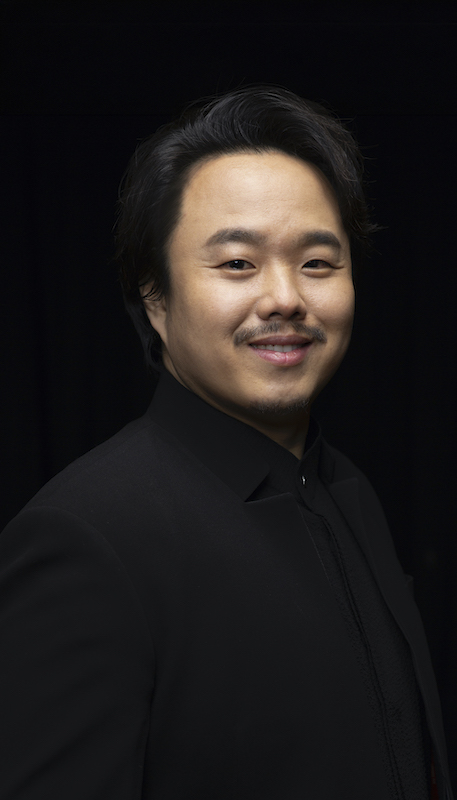 The star Korean tenor Won Whi Choi sings Samson, with Mae Heydorn as Dalila, Alexey Gusev as the High Priest of Dagon and a Dorset Opera regular Jamie Formoy as the Messenger. The new production is directed by Paul Carr and conducted by Jeremy Carnall. The design team is the same as for L’Elisir d’Amore.
Pictured are the soloists for both operas: L’Elisir d’Amore – Jay Broadburst, Haeran Hong, Aidan Smith, Jonathan Eyers and Daisy Lapworth; Samson et Dalila – Won Whi Choi, Mae Heydorn, Alexey Gusev and Jamie Formoy.