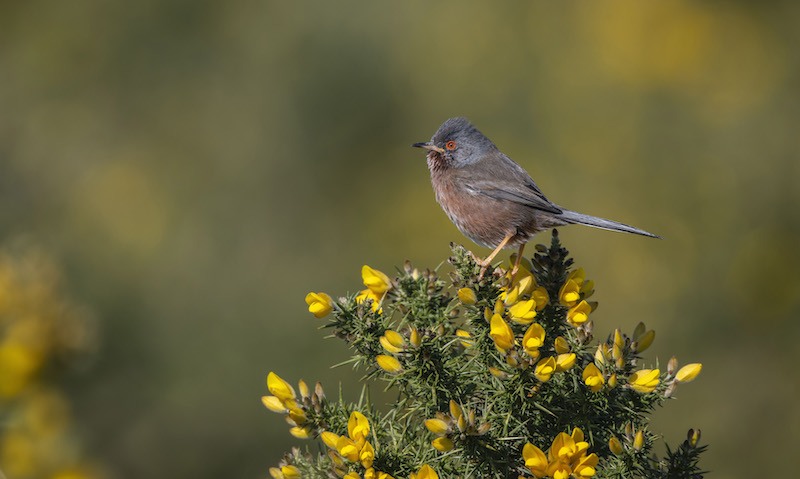
 A TINY bird that is easy to miss, but which has a distinctive song, is back from the brink of extinction with nearly 100 pairs at RSPB Arne this year.
The Amber listed Dartford Warbler suffered from a population crash in the 1960s, leaving only a few pairs in Dorset and the species on the brink of extinction in the UK. The most recent national survey has now revealed the highest ever number of Dartford Warblers recorded on RSPB nature reserves with 264 pairs counted in 2025 – a 44 per cent increase in just five years.
And a record breaking 97 of these pairs were recorded at RSPB Arne last year. Their comeback is thanks in part to conservation efforts carried out by RSPB nature reserve staff and volunteers to restore their precious heathland habitat.
A recent national Heathland Birds Survey has recorded 264 pairs of Dartford Warblers on RSPB nature reserves during 2025 – their best year on record.
In the years since the 1960s extinction crisis, Dartford Warbler numbers have undergone population crashes due to cold winters but numbers have generally risen. The return of these diminutive but delightful little birds is largely thanks to efforts to restore their precious heathland habitat, demonstrating the importance of these protected areas for threatened species.
The national survey also revealed the UK population estimate has reached around 4,100, up from 3,200 during the last national survey in 2006.
A small, charismatic bird often seen perched on top of gorse singing a scratchy song, Dartford Warblers are found on lowland heathland in Southern England. They are grey-brown in colour, with a distinctive red eye ring, russet breast and long tail. Dartford Warblers are particularly sensitive to cold, harsh winter weather and, as a ground-nesting species, heavily rely on dense gorse within areas of mature heathland for vital food, shelter and protection.
Lowland heathland, as cared for at RSPB Arne, is one of the most threatened habitats in the UK with 80 per cent lost since the 1800s due to forestry and land-use change. To tackle this, dedicated RSPB staff and volunteers have been restoring the precious habitat on nature reserves by removing plantations and reverting arable land. Joining up areas of fragmented heathland provides Dartford Warblers with the vital dense gorse they need to thrive. Gorse is a tightly packed, spiky shrub that provides a safe nesting place and hunting ground for Dartford Warblers, which specialise in picking spiders and caterpillars from their hiding places. Restoring heathland also benefits a range of wildlife from birds and mammals to insects, reptiles and amphibians.
At RSPB Arne, alongside heathland management, the team has also started the process of converting a further 15ha of farmland to heathland. The reserve is also holding guided heathland walks throughout summer where visitors get the chance to see these beautiful birds for themselves: https://events.rspb.org.uk/arne
RSPB Arne site manager, Peter Robertson, said: “Restoration of heathland across RSPB Arne has been on a truly landscape scale. Visiting the heathland during summer, the sound of Dartford Warblers singing is everywhere. Being able to hear those calls is the perfect reminder that the hard work is paying off. Helping to maintain then increase numbers, and reverse population declines of species like the Dartford Warbler is very rewarding.”
Photograph © rspb-images.com