 IF you are a fan of the popular television series The Detectorists you will know that the curious and occasionally eccentric people who head out into the countryside with their metal detectors sometimes make remarkable discoveries. A Dorset detectorist discovered a beautiful Early Bronze Age mirror and another found an equally rare and exquisite crescent-shaped gold collar. These are just two of the astounding discoveries on show in Treasure! Lost and Found, at Dorset Museum & Art Gallery in Dorchester until 13th September.
The astonishing creative and craft skills displayed in this dazzling exhibition provide a welcome counter to the old-fashioned idea that our prehistoric or early medieval ancestors were primitive, with the implication that they lived miserable, short lives in conditions no better than beasts. Even the shortest look around the exhibits in Dorchester will blow that prejudice out of the water. (We do tend to exclude the ancient Greeks – plays, sculpture, philosophy, etc – and the Romans – all those straight roads, and a form of central heating unequalled for centuries).
 Curator Jon Marrow describes the exhibition as a celebration of Dorset. It draws on the museum’s own impressive and nationally important objects across several thousand years, from the Bronze Age to the post-Roman, pre-Norman era. This is the period that used to be called the Dark Ages and that we now know to have been a time of huge change in Britain, from which many different groups – including Anglo Saxons and Vikings – have left artefacts of staggering beauty and skill. It also features important collections on loan from the Potteries Museum & Art Gallery’s Staffordshire Hoard – and Lancashire County Museum Service’s Silverdale Hoard.
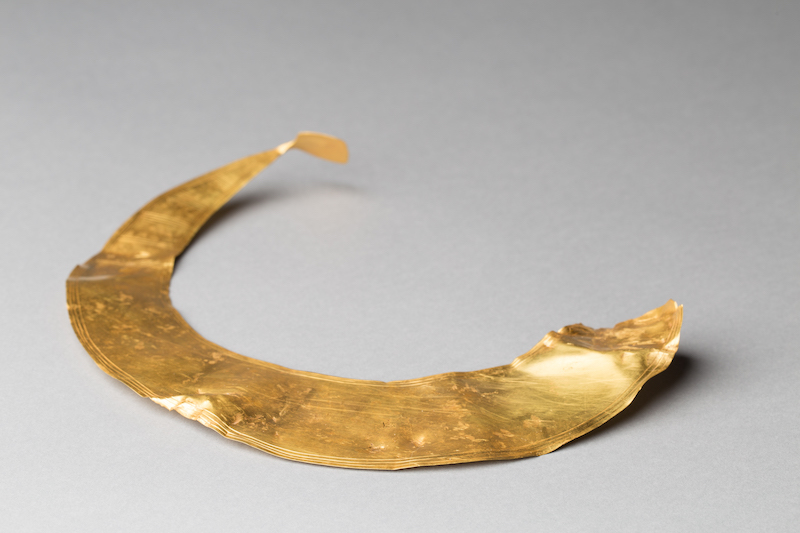
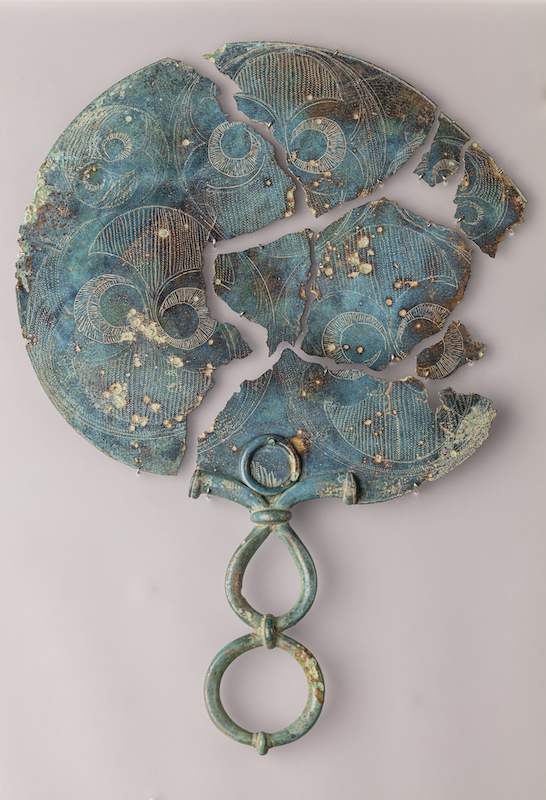
The Dorset exhibits found by detectorists include a staggeringly beautiful Early Bronze Age mirror which is the image for the exhibition (pictured). It was found at Langton Herring, in the burial site of a young woman who is presumed to have been a member of a high status family. As Jon Marrow says, it is a remarkable example of the “sophistication of these people.” Another Dorset detectorist find is the Tarrant Valley lunula, a beautiful prehistoric, crescent-shaped gold collar, also dated to the Early Bronze Age, more than 3,000 years ago.
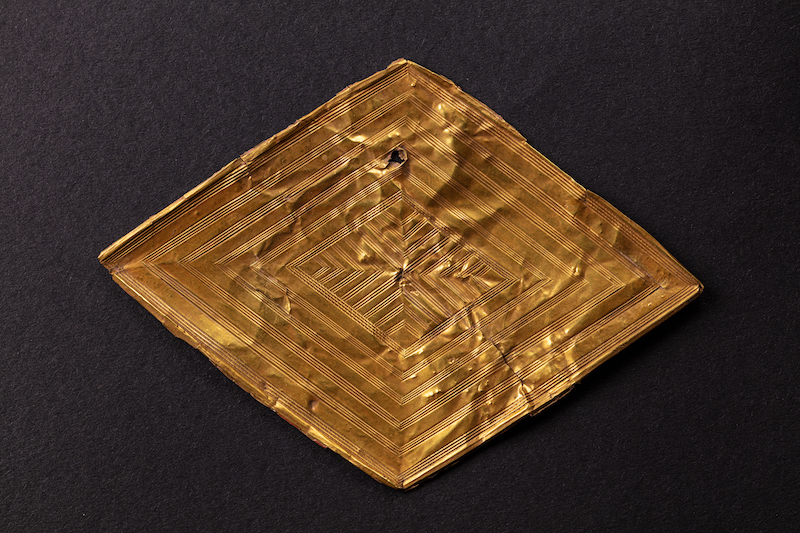
 From the mid-19th century, long before metal detectors, Edward Cunnington carried out excavations at 46 barrows in Dorset, and some of his finds, accompanied by his watercolour paintings, give a fascinating picture not only of the wealth of ancient Dorset artefacts but the skill and tenacity of early archaeologists. His many important discoveries included objects in gold, amber and jet. In 1882 he excavated Clandon Barrow, near Martinstown, discovering the most richly-furnished Bronze Age burial in Dorset. The treasures discovered suggested wealth or great exploits in distant travel and trade by people living on the South Dorset Ridgeway. Cunnington was descended from William Cunnington, a late 18th century Wiltshire archaeologist and antiquarian.
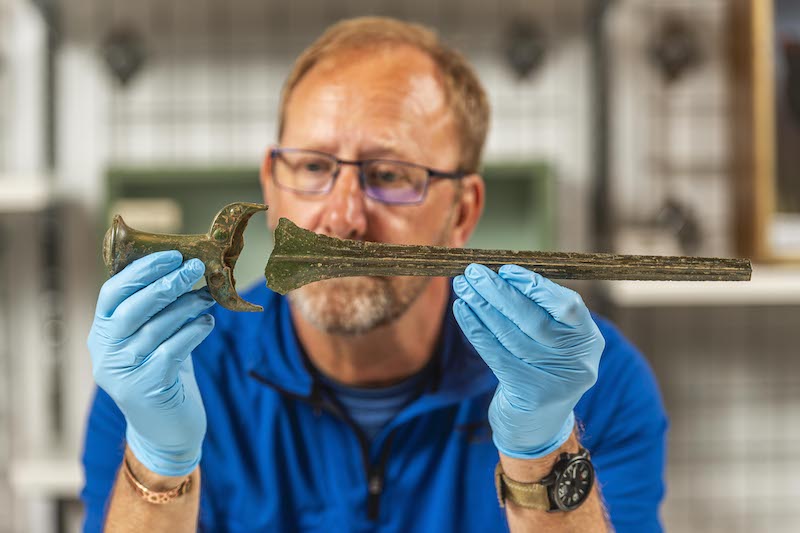
Some items are on display for the first time. They include a damaged prehistoric gold hoard from Crichel, comprising a torc and bracelets that date to around 1400-1150 BCE and were acquired with funding from The Headley Trust, The Robinson Trust and V&A Purchase Grant Fund. Also seen for the first time is a uniquely preserved Middle Bronze Age rapier buried with an axe-head and a beautifully incised bronze bracelet , dated around 1400-1275 BCE, and found in a Stalbridge field.
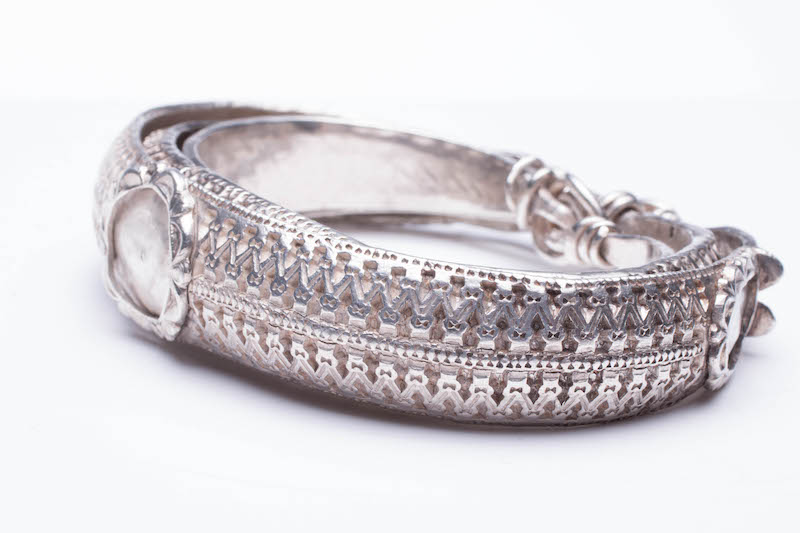
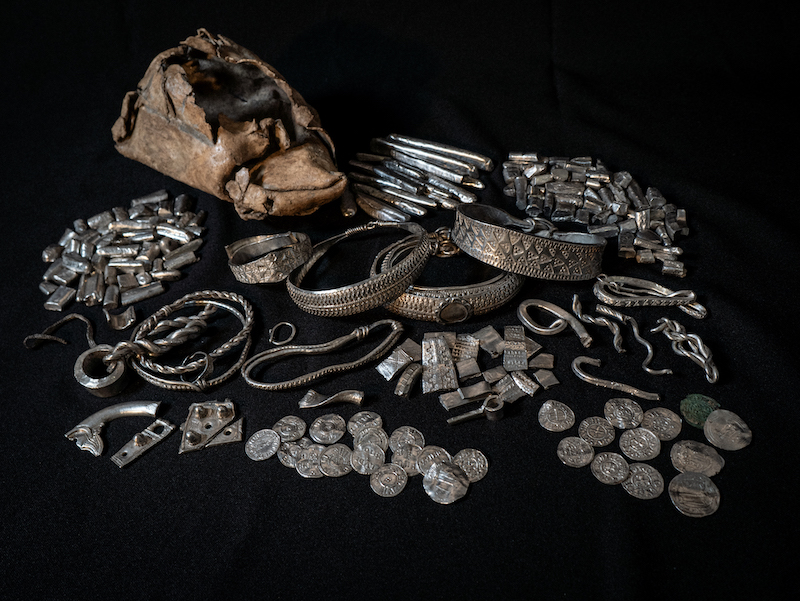 Significant recent finds include a gold and garnet-encrusted sword pommel and hilts dating from 570-630 CE – part of the Anglo-Saxon Staffordshire hoard discovered in 2009. Some of the most breathtaking exhibits are from Viking treasures, including intricately decorated silver bracelets and rare silver coins dating from 880-900CE that were found in Lancashire in 2011. Importantly, they prove the links with the Frankish empire and the Arabic world, underlying an important aim of the exhibition – as well as telling the discovery stories of the objects, it explains how they enhance our understanding of the past.
The show has four distinct sections. The first, What Lies Beneath, explores how ancient objects ended up in the ground – these include grave goods or items lost due to violent historical or natural events. The second focuses on how these objects were brought to light, either through archaeological excavation or metal detecting. In the third area, visitors explore how the definition of ‘treasure’ has changed through time – the famous Anglo-Saxon ship discovered at Sutton Hoo in Suffolk was not considered a ‘treasure’ under the Treasure Trove law of the time (1939) because it was technically a burial and had not been put into the ground with the intention of retrieving it at a later date.
 The exhibition concludes with a focus on why it is important for archaeological finds to enter museum collections, showing how continued research and new technologies are allowing experts to reconstruct ancient lives, allowing us all to continue learning about our past. New scientific research that changes our thinking about the early peoples of the British islands is revealed.
One of the exciting aspects of Treasure! Lost and Found is the 21st century contributions of students at Arts University Bournemouth. From a Roman soldier created with gaming technology to Iron Age costumes made from recycled textiles, the students have used their creative and technical skills to give visitors a real sense of life in Iron Age Britain, or an understanding of where and how the vast, multi-ethnic Roman armies ended up in, for example, first century Dorset.
You can even talk to a Roman soldier – Lucius, a handsome young man, the image of a smart legionary. Born in Macedonia, he followed his father into the army, helping to bring Pax Romana even to the savage Durotriges tribe of what we now know as Dorset. The slightly disconcerting thing about Lucius is that he never blinks … he is an avatar, a brilliant two-dimensional creation, who can answer many of your questions, and he should prove a hit with young visitors familiar with the versatility of characters from games such as Fortnite or League of Legends.
 At the other end of the technical scale, the AUB students have created a walk-in Iron Age round-house, with Iron Age-inspired costumes using recycled textiles and typical Iron Age domestic artefacts. There is also a series of boxes which can be opened to give the eager nose a sniff of Iron Age smells from daily life and death – another sure-fire hit with young visitors!
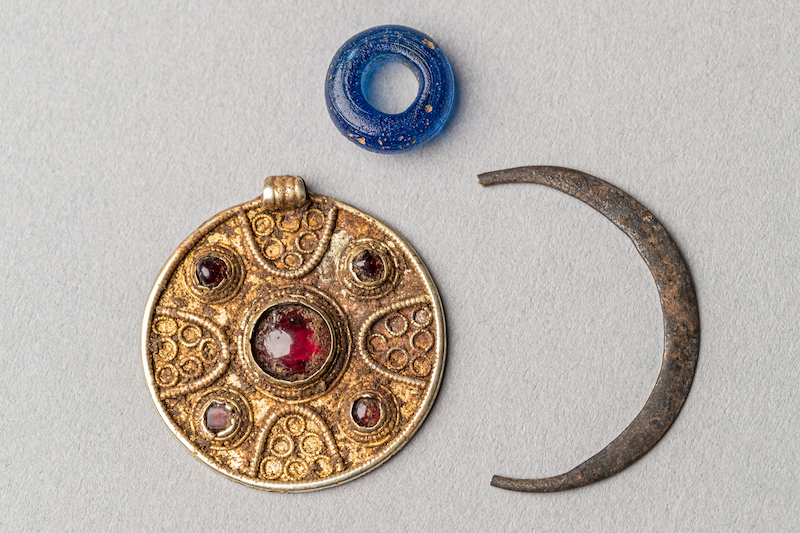
Alongside the ancient bling – the beautiful items of jewellery, such as a bejewelled gold pendant found in Charminster or the ornate craftsmanship of the Silverdale Hoard – the exhibition also includes artefacts from everyday life, such as a candle holder, whistle and posy ring, and there is rare evidence of prehistoric woven cloth.
Claire Dixon, Dorset Museum’a executive director, says: “Dorset Museum & Art Gallery has been actively acquiring Treasure since its early origins, and we are excited to be displaying so many of our internationally significant artefacts, many of which have never been seen before. This would not have been possible without the support of funders. I would like to thank the NLHF (National Lottery Heritage Fund), V&A Purchase Grant Fund, the Headley Trust, The Robinson Trust and our many generous donors, who have made it possible for us to acquire these artefacts for the nation. We look forward to sharing them with our audiences, both during the exhibition and afterwards, when they will be incorporated into our displays.”
 A beautiful lunula found by a detectorist in the Tarrant valley. Photograph © Dorset Museum & Art Gallery
A gold lozenge from Clandon Barrow, one of Edward Cunnington’s discoveries. Photograph © Dorset Museum & Art Gallery
Items found in a grave at Charminster. Photograph © Dorset Museum & Art Gallery
Two items from the Silverdale Hoard. © Lancashire County Museum Service
A sword found in the Stalbridge Hoard. Photograph © Dorset Museum & Art Gallery
The Early Bronze Age mirror found Langton Herring, which is the image for the Treasure exhibition. Photograph © Dorset Museum & Art Gallery