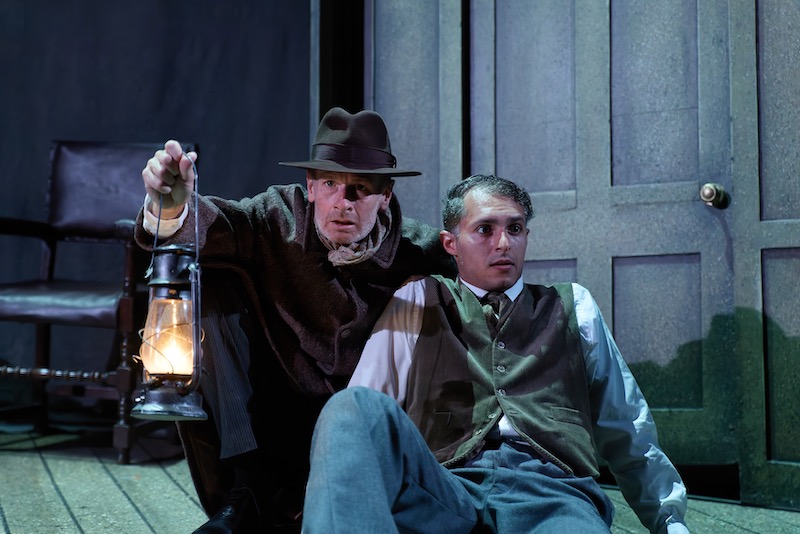
 HOW a play written to fill a 70-seat theatre over the Christmas period, with such a restricted budget that four actors at most could be employed, turned into the second longest continuous London presentation, (13,232 performances and only The Mousetrap can boast a longer run) is quite a story in itself. That’s the history of Stephen Mallatratt’s adaptation of Susan Hill’s ghost story, since its opening in the Stephen Joseph theatre in Scarborough in 1987 to its final London presentation in 2022. an the Fortune Theatre.
Since then it has successfully thrilled audiences throughout the world, but I doubt that it has ever played in a theatre with as many in-house ghosts as those who inhabit the Theatre Royal, Bristol, now known as The Bristol Old Vic, which, opening in 1766, is the oldest continuously operating theatre in the English speaking world. Many an actor and technician working at the Bristol theatre has claimed to see The Grey Lady –could she be the legendary Sarah Siddons (1755/1831)? And in modern times, what made the security man’s brave German Shepard dog refuse, about every three months, to go further than the second landing of the old stone staircase backstage?
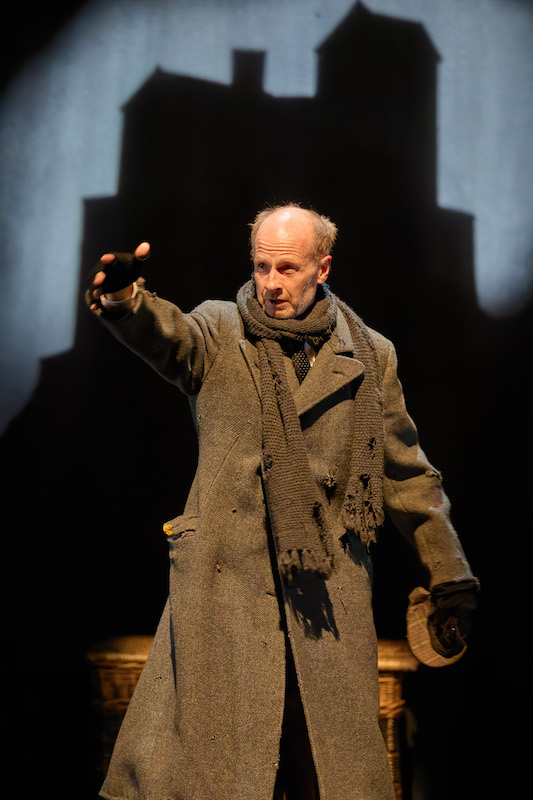 It is an ideal space therefore for two actors on a virtually empty stage – just a large props basket, a couple of chairs and a rail with 1920s-style coats on it – with the aide of expertly-produced and perfectly-timed lighting and sound effects, to spark the imagination of an audience.
Arthur Kipps, a late-middle-aged solicitor, wants to tell story of his harrowing experiences when, as a young man, he was sent to finalise the affairs of the late Alice Drablow. In the mysterious gothic Eel Marsh House he encountered the spectres which had a tragic effect on his future life.
To tell the story he hires an actor to help him put his five-hour script into an acceptable working presentation. The actor takes over the role of Kipps and, gradually emerging as an actor, Kipps portrays all the other characters encountered in the story. Well, not quite all, because there is the mysterious Woman in Black who we see fleetingly as the story unfolds, or is it just our imagination?
Under the skillful playing of John Mackay as Arthur Kipps and Daniel Burke as the actor, not only do the characters come alive, but the props basket tuns into a railway carrriage and a pony and trap. We are shocked out of complacency when the contents of the locked room are revealed and share in the tragedy and horror of the violent events which consumed not only those who lived in Eel Marsh House, but anyone who, since the tragedy, has seen the Woman in Black.
Because the story plays on the imagination rather than trying to paint realistic pictures, time after time the horror within the story shocks the audience to a far greater extent, often jolting them violently to attention as something totally unexpected is revealed, opening up their worse fears.
Here, this expertly produced and directed ghost story conjures up spectres befitting the theatre in it is performed, thanks to playing on that most powerful of human emotions – our imagination.
GRP