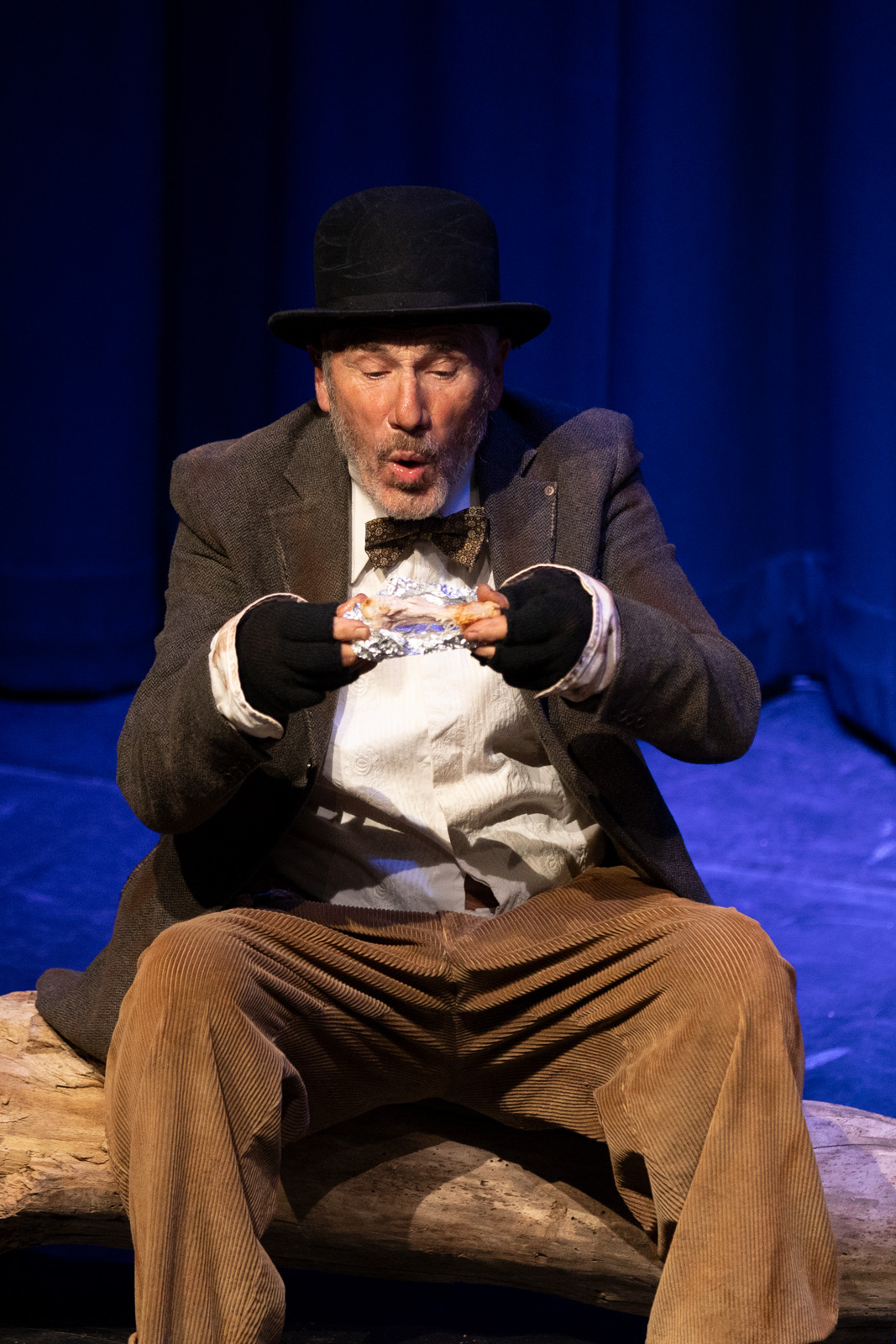
 ADAM Lanfranchi has a theory about Samuel Beckett’s legendary absurdist play Waiting for Godot – that attempting a definitive explanation is a mug’s game.
So when the chance came to direct the play for Street’s Strode Theatre, Adam chose his own cast from actors from around the region, gave them the scripts and sent them away for three months to get to grips with their characters. His faith in their abilities has paid dividends.
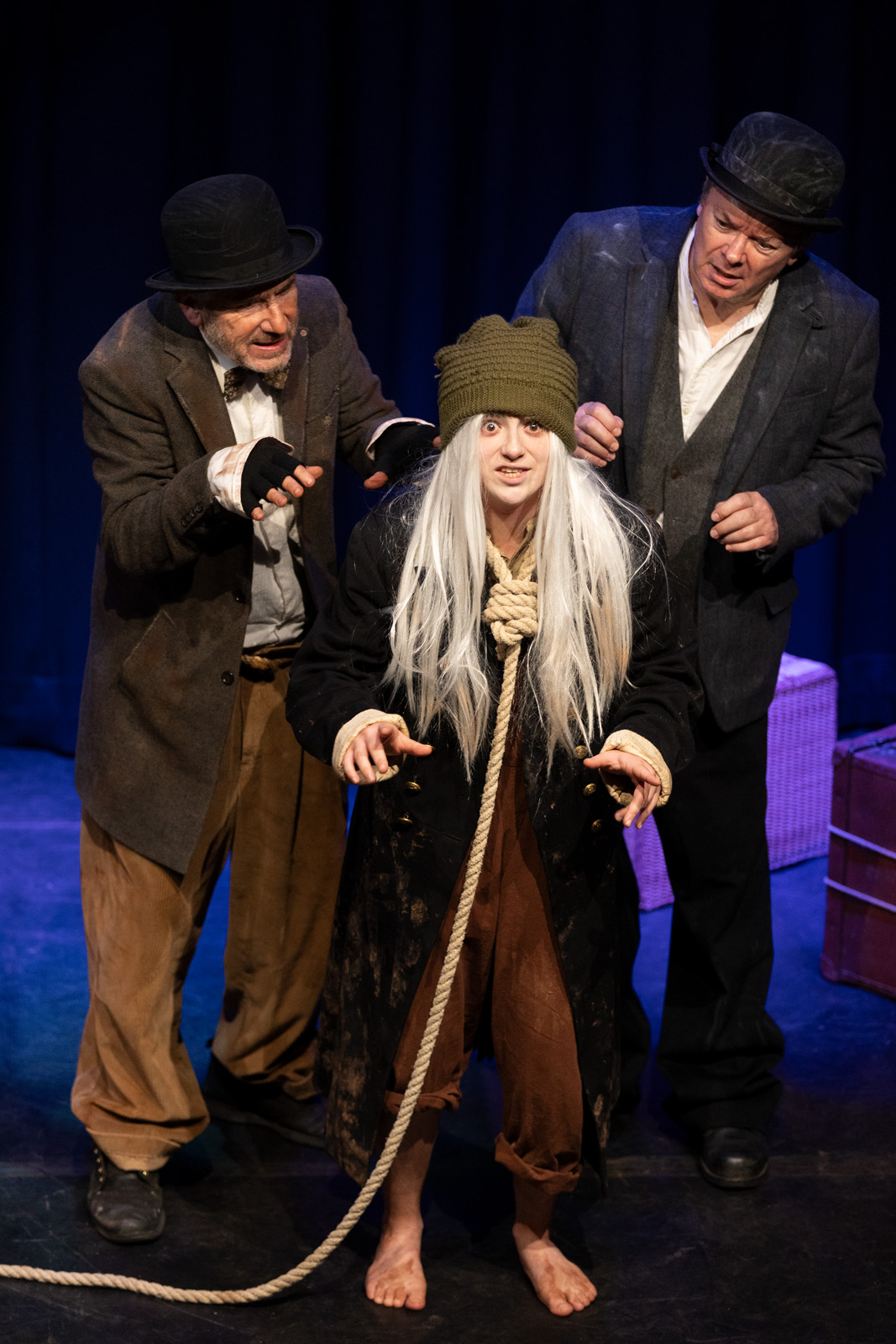 Those characters, for those who don’t know, are two tramps waiting for the arrival of Godot, who they hope will be able to change their lives. While they wait they are visited by a bombastic, entitled madman and his bond slave.
Since its publication in 1953, Beckett’s play has perplexed and preoccupied generations of academics, students and theatre-goers, its iconic status attracting many leading actors to the main roles of Vladimir and Estragon. The result is some productions are more about the actors than the characters, with audiences flocking to see theatre, film and TV legends on stage.
But in a studio theatre on a college campus in Somerset, a director inspired by David Lynch’s peculiar, humorous, dark and repetitive cinematic style and the music of Tom Waits, and a cast of amateur actors prepared to delve analytically into characters who have challenged the literary world for decades, have produced a stunning and mesmerising account of Beckett’s masterpiece.
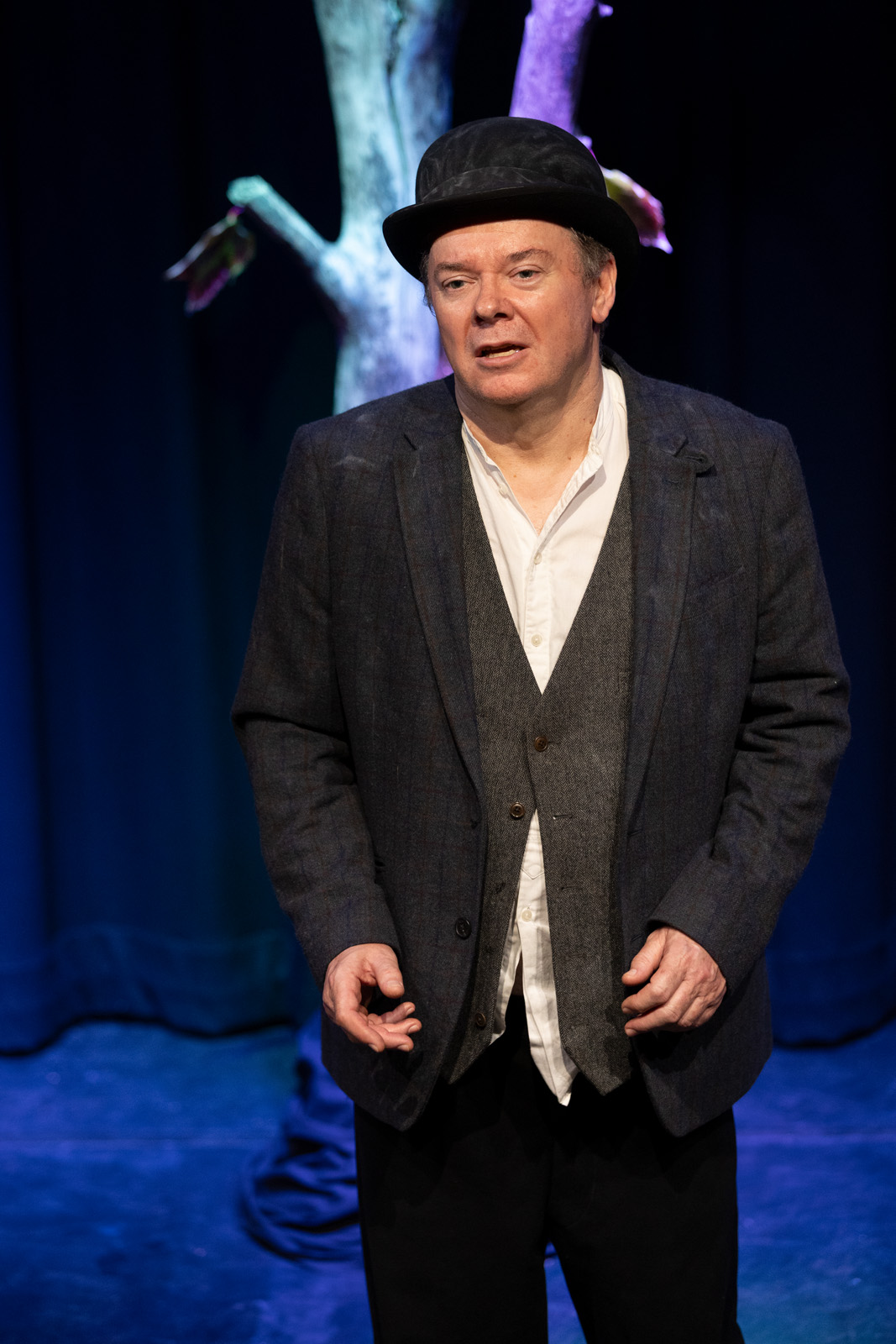 Dave Palmer has found a warmth and compassion in Vladimir, the one who vaguely knows Mr Godot, among the ailments, repeated dreads and determination to stay in the moment. This is a remarkable performance, full of nuance and insight, but making the most of every comic moment with extraordinary physical and vocal skill. He is constantly assuring and reassuring his companion that they are Waiting for Godot, and he makes every repetition sound a little bit different.
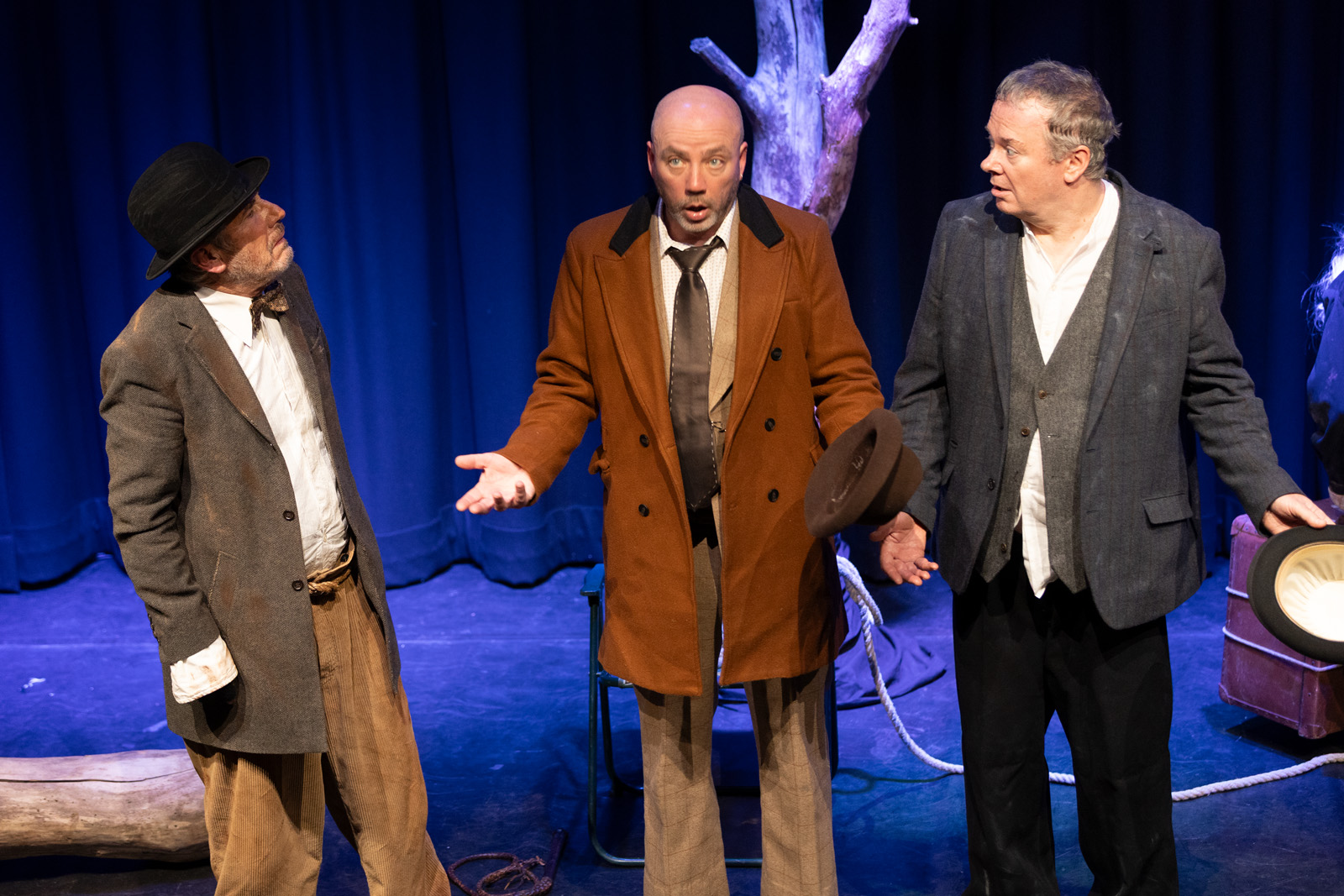 The dour and malodorous Estragon is played by John Howden as a man losing the plot of his life, tired and bored with its nothingness and trapped in an unremembered cycle of day-after-day. Martyn Jessop, whose performance as the monster in Adam Lanfranchi’s production of Frankenstein at Street last year is unforgettable, plays Pozzo as a cruel master with two voices to match his two faces, an unpredictable and demented lunatic who keeps Lucky as a slave.
And Phoebe Lynch has the task of making Lucky into a real character. This is done not only by the famous stream of conciousness speech described by Beckett as a “word salad parodying the music-hall demented lecture, with three incoherent premises, one major and two minor, but no logical reconciliation,” but by a 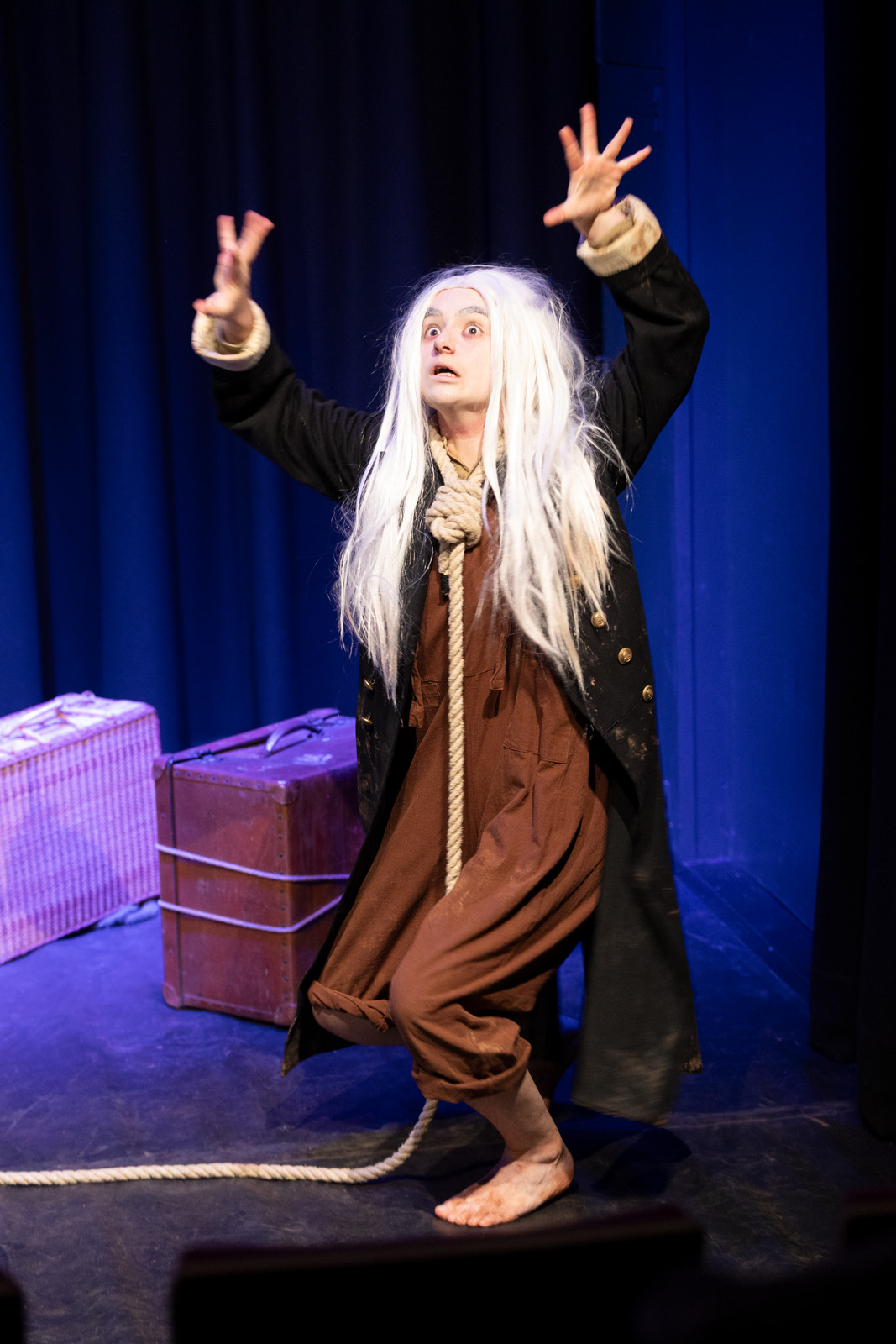 carefully choreographed journey round the stage involving all four characters, to great comic effect with added jeopardy.
Please don’t let the reputation of the play put you off. A handful of tickets are still available for this thought-provoking and highly entertaining production, on nightly until Saturday 31st October.
GP-W